
Red Light vs Sunlight: What Each Does
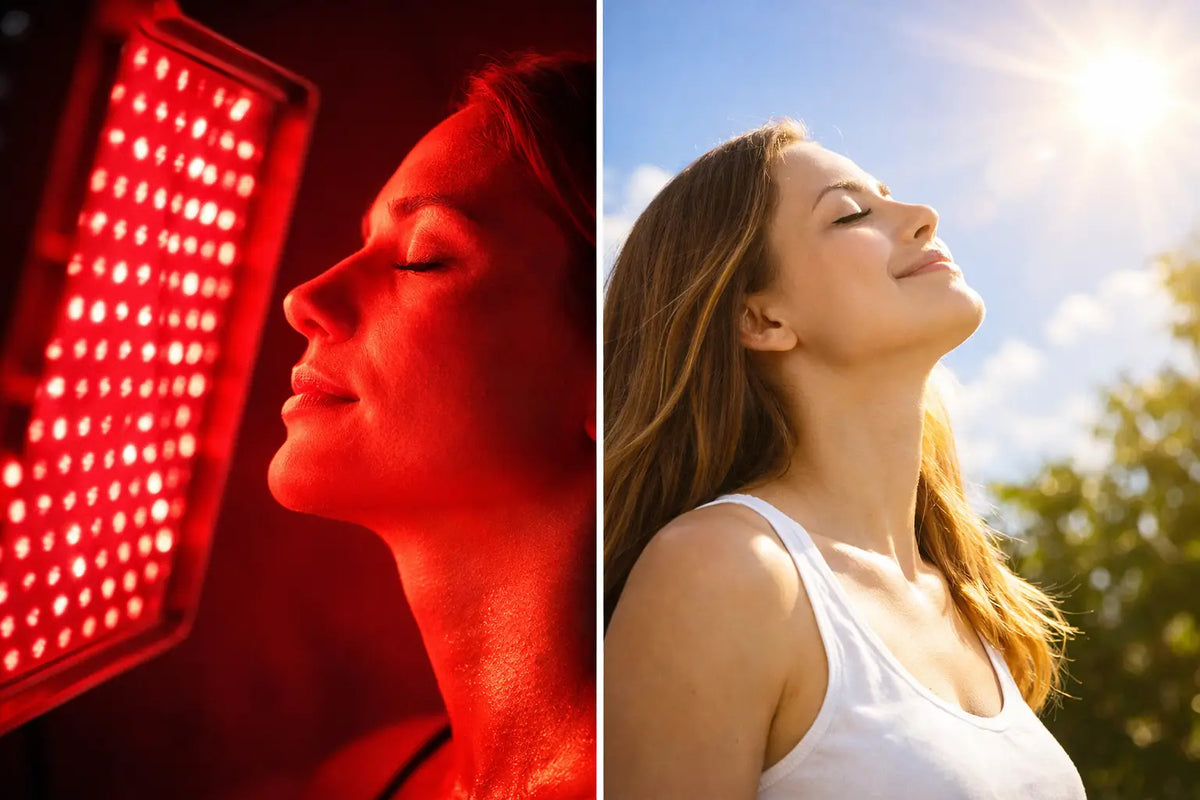
A 10-minute walk outside can change the tone of an entire morning. A red light session can fit precisely into a post-training recovery ritual. In the question of red light vs sunlight, the better choice is rarely one or the other. They are distinct forms of light with different strengths, different risks, and different places in a deliberate wellness routine.
Sunlight is the original environmental signal. It helps set the body clock, supports vitamin D production under the right conditions, and connects time outdoors with movement, mood, and daily rhythm. Red light therapy is a targeted, controlled modality designed to deliver specific visible red and near-infrared wavelengths without ultraviolet exposure. Treating them as interchangeable misses the value of both.
Red Light vs Sunlight: The Fundamental Difference
Sunlight is broad-spectrum radiation. It contains visible light across the color spectrum, along with infrared and ultraviolet radiation. Its composition and intensity shift by season, time of day, cloud cover, altitude, latitude, and reflective surfaces. That variability is part of its biological power, but it also makes sunlight difficult to dose with precision.
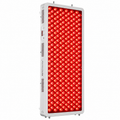
A quality red light therapy device concentrates selected wavelengths, commonly visible red light around 630 to 660 nanometers and near-infrared light around 810 to 850 nanometers. These ranges are used in photobiomodulation research because they can interact with tissue at different depths. Red light is generally used closer to the skin's surface, while near-infrared light is invisible and may reach deeper tissues.
Most importantly, red light therapy panels are designed without UV radiation. That means they do not tan the skin, cause sunburn, or stimulate vitamin D synthesis. It also means they cannot replace the outdoor light exposure that anchors circadian rhythm.
What Sunlight Does Best
Morning daylight is a powerful timing cue for the brain. Outdoor light, even on an overcast day, is typically much brighter than indoor lighting. Exposure early in the day can help reinforce the sleep-wake cycle, supporting alertness when the day begins and better sleep pressure later that evening.
Sunlight also contains UVB, the portion of the spectrum that initiates vitamin D production in skin. How much is produced varies substantially based on skin tone, geography, season, clothing, age, and sunscreen use. This is not a reason to seek excessive unprotected exposure. UV radiation contributes to premature skin aging and raises skin cancer risk. The right approach is measured time outdoors, shade and protective clothing when appropriate, and a conversation with a clinician if vitamin D status is a concern.
There is also a benefit that no panel fully reproduces: being outside changes behavior. A walk after waking often pairs daylight with low-intensity movement, fresh air, and a clean boundary between sleep and work. For professionals who spend long days under screens and artificial overhead light, that simple practice can be one of the highest-return wellness habits available.
Sunlight Is Not a Precise Recovery Tool
Sunlight includes red and near-infrared wavelengths, so it is reasonable to ask whether outdoor time provides the same effect as a red light panel. In a broad sense, natural light does expose the body to these wavelengths. In practice, the dose is inconsistent, the spectrum is mixed, and the exposure includes UV.
A sunrise walk and a targeted light session therefore solve different problems. One is an environmental ritual with circadian and lifestyle value. The other is a controlled recovery practice that can be repeated at a chosen distance, duration, and time of day.
What Red Light Therapy Does Best
Red and near-infrared light therapy is most useful when consistency matters. Photobiomodulation research has explored its role in supporting cellular energy processes, circulation, exercise recovery, skin appearance, and temporary relief of minor muscle and joint discomfort. Results depend on the device, wavelength, irradiance, treatment area, session schedule, and the individual using it.
The appeal of an at-home panel is not that it outperforms nature at everything. It is that it turns a specific modality into a reliable practice. A full-body session before work, after training, or during an evening wind-down can be performed regardless of season, weather, or access to daylight.
For skin-focused use, controlled red light is especially compelling because it avoids UV exposure. The goal is not a quick cosmetic change. It is steady, cumulative support for a healthy-looking complexion as part of a larger system that includes sleep, nutrition, hydration, sun protection, and sound skincare.
For active adults, near-infrared wavelengths may be a practical addition around demanding training blocks. It should not be framed as a substitute for progressive training, protein intake, mobility work, or adequate sleep. It can, however, make the recovery environment more intentional - a quiet 10-minute interval that signals the shift from output to repair.
Which Is Better for Your Goal?
The answer becomes clear when the goal is specific. For morning alertness, sleep timing, and the psychological reset of being outdoors, choose daylight. Get outside early when possible, ideally without viewing it through a window, since glass changes the spectrum and reduces light intensity.
For vitamin D, red light is not the answer. Sun exposure may contribute depending on conditions, but it must be balanced against UV risk. Testing and clinician-guided supplementation are often more controlled options for people with low levels or limited sun availability.
For targeted, UV-free light exposure to support recovery or skin goals, a red light device is the more precise choice. Look beyond the broad promise of “red light” and consider wavelengths, irradiance, treatment area, session guidance, build quality, and eye-protection recommendations. These details determine whether a panel can be used confidently and consistently in a home environment.
For stress regulation, use both strategically. Daylight can create a calmer, more alert start to the day. Red light can establish a lower-stimulation recovery window later on. Many high performers benefit less from adding another extreme intervention and more from giving each part of the day a clear physiological signal.
A Practical Light Routine for Home
A disciplined light routine does not need to be complicated. Begin with outdoor daylight shortly after waking. Even five to 15 minutes can be a practical starting point, adjusted for weather, schedule, and local conditions. Avoid staring at the sun. The objective is ambient outdoor brightness, not direct solar viewing.
Use red light therapy at a separate time based on your objective and the device instructions. Some people prefer a morning session as part of an activation ritual; others use it after a workout or in the early evening. If late-night use feels energizing, move it earlier. The best timing is the one that supports sleep rather than compromises it.
Consistency matters more than marathon sessions. Follow the manufacturer's distance and duration guidance, and give a routine several weeks before judging it. More intensity is not automatically better. Light therapy follows a dose-response relationship, and excessive exposure may not produce better results.
A refined home setup reduces friction. Place the panel where it supports an existing habit: near a training space, beside a mobility mat, or in a quiet recovery corner. When the environment is calm and the practice is visible, adherence becomes less dependent on motivation.
Safety, Skin Health, and Smart Use
Red light therapy is generally well tolerated when used as directed, but it deserves the same judgment you would apply to any performance modality. Follow device-specific eye guidance. Do not look directly into bright LEDs, particularly at close range. If you have an eye condition, are using photosensitizing medications, have a history of light-triggered reactions, or are managing a medical condition, consult a qualified clinician before starting.
Sunlight requires a separate safety standard. Protect skin during extended outdoor exposure with shade, clothing, hats, and broad-spectrum sunscreen as appropriate. Do not use a red light session as justification for more UV exposure, and do not view either modality as medical treatment for a condition that needs professional care.
The most effective protocol is not the most complicated one. Let daylight keep your internal clock oriented to the world outside. Let red and near-infrared light provide a controlled moment for recovery inside. With each used for what it does best, light becomes less of a wellness trend and more of a quiet, repeatable part of living at your peak.