
Red Light Panel vs Mask: Which Fits Your Routine?
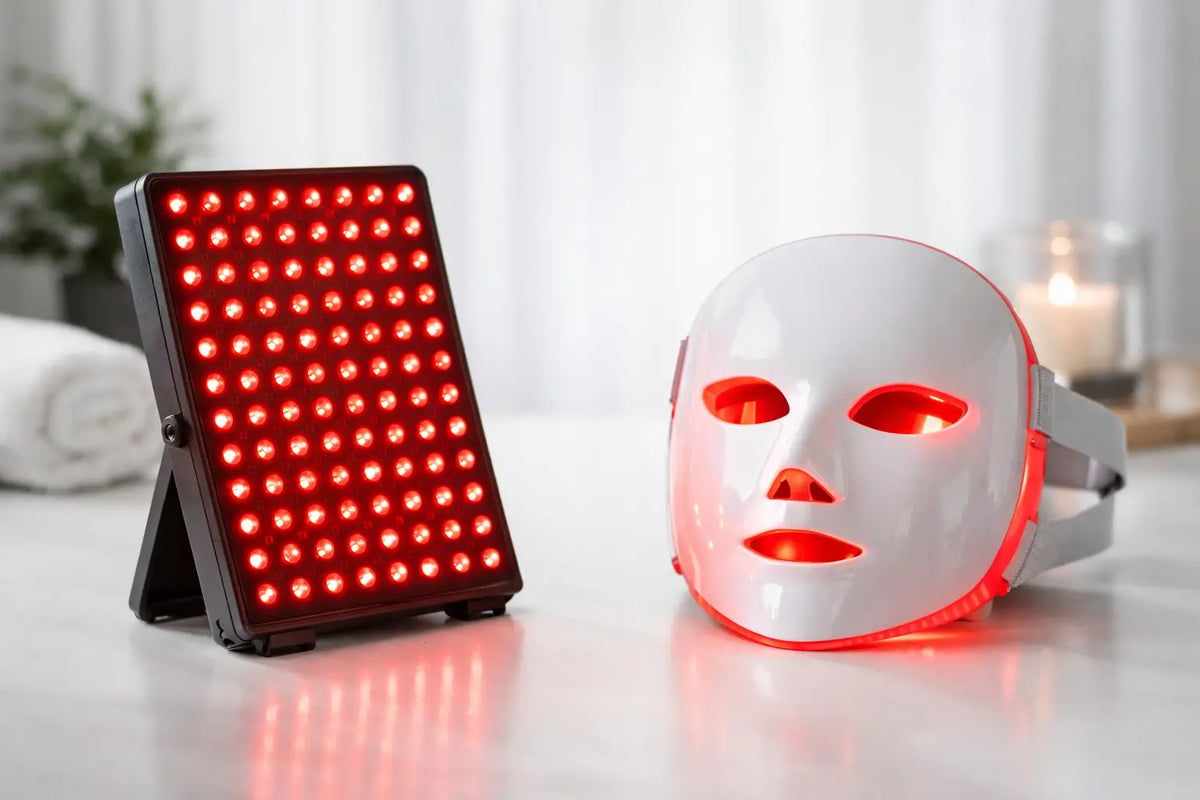
A red light panel vs mask decision is less about which device is universally better and more about what you expect from the ritual. A mask is a focused skin-care tool you can use while reading or winding down. A panel is a broader recovery modality that can support skin quality while fitting into training, mobility, and longevity routines.
The right choice comes down to treatment area, output, consistency, and the degree to which you want red light therapy to serve the rest of your body. For someone building a deliberate home recovery environment, those details matter more than novelty.
Red Light Panel vs Mask: The Core Difference
Both devices use red and near-infrared light, generally in wavelength ranges associated with photobiomodulation. Red light, often around 630 to 660 nanometers, is typically used for more surface-level applications such as skin appearance. Near-infrared light, commonly around 810 to 850 nanometers, reaches deeper and is often selected for muscles, joints, and post-training recovery.
A mask places LEDs directly over the face. Its strength is proximity and convenience. The design naturally guides treatment toward facial skin, usually with a hands-free format that makes a 10-minute session easy to repeat.
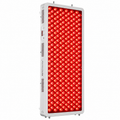
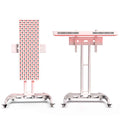
A panel creates a larger field of light. Depending on its size and placement, it can treat the face, neck, chest, back, legs, or other areas in one session. It also gives you more control over your distance from the device, your body position, and the area you prioritize that day.
Neither format eliminates the need for consistent use. Light therapy works best as a measured, repeatable practice, not as an occasional high-intensity event.
Choose a Mask When Skin Is the Primary Goal
A red light mask is often the cleanest fit for someone whose goal is facial skin support. It is compact, requires almost no setup, and can live in a bathroom cabinet or beside a bed. If you want a simple evening ritual that asks little of your schedule, a mask has real appeal.
The close fit can also make treatment feel straightforward. You put it on, choose the programmed session, and let the device do its work. That simplicity matters for adherence. A well-designed protocol that you use four or five times per week is more valuable than a more capable device that stays in its box.
Masks do have practical limitations. Coverage is largely restricted to the face, and fit varies. Some people find them relaxing; others dislike the weight on the bridge of the nose, the straps, or the sense of being enclosed. If your skin goals extend to the neck, chest, or scalp, a mask may require additional equipment or a different format.
There is also less flexibility around distance. That is convenient, but it means you have fewer ways to adjust the intensity and treatment field. For a person who only wants facial care, that may be exactly the point. For someone who wants one device to serve multiple recovery goals, it can feel restrictive.
Choose a Panel When Recovery Extends Beyond Your Face
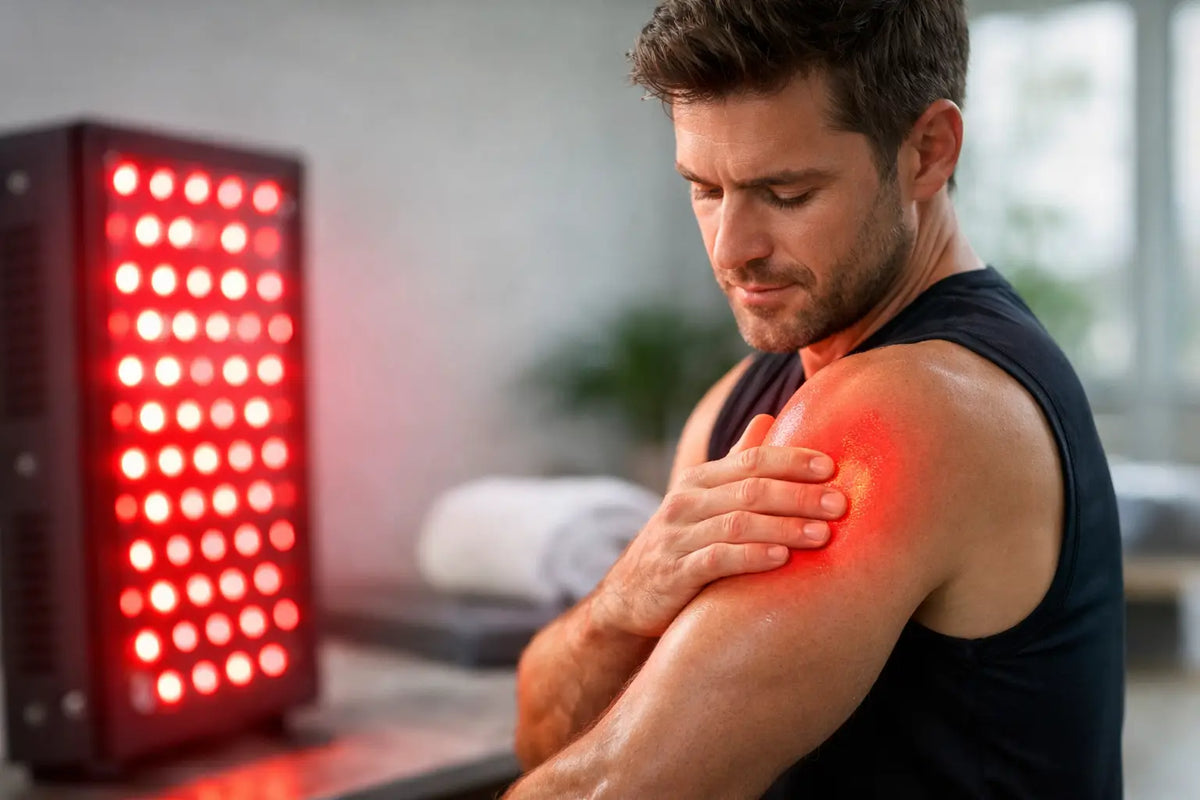
A red light panel is designed for range. It can become part of a morning activation ritual, a post-lift cooldown, or a quiet evening reset before sleep. Stand in front of it for full-body exposure, position it near a sore shoulder, or use it while stretching after a run. The modality adapts to the day.
This makes panels especially compelling for athletes, active professionals, and anyone creating a home longevity system. Facial skin is still within reach, but it is no longer the only use case. A panel can address larger areas without requiring you to buy separate devices for different parts of the body.
Panels may also offer more substantial output than a wearable mask, though specifications must be read carefully. Irradiance, measured in milliwatts per square centimeter, describes the power delivered at a given distance. Higher numbers are not automatically better. A device with strong output may call for shorter sessions or greater distance to keep exposure appropriate.
Look beyond a headline irradiance claim. Ask whether the measurement is provided at a stated distance, whether the panel includes red and near-infrared wavelengths, how large the treatment area is, and whether the session guidance is realistic for daily life. Clinical framing without clear usage instructions is not enough.
The trade-off is footprint. A panel needs a stable place to live, whether on a stand, a door mount, or a wall. Larger models demand more space and a more intentional setup. In a refined home environment, that is not merely a logistical detail. The device should feel considered in the room, not like temporary gym equipment that has nowhere to belong.
Compare Coverage, Comfort, and Time Honestly
The most useful question is not, “Which device has more LEDs?” It is, “What will I actually use?”
A mask is efficient when your target is the face and you value portability above all else. It is easy to travel with, easy to store, and easy to use while seated. For an established skin-care routine, it can be a disciplined addition rather than a new project.
A panel asks for more space but can consolidate several use cases. You may use it on your face before work, then on your quads after cycling, then on your upper back after a day at a desk. For households where more than one person will use the device, its versatility can improve the value equation quickly.
Comfort deserves equal weight. With a panel, you are not wearing anything. You can listen to music, breathe, stretch, or simply stand still. With a mask, the session is more contained. Neither experience is inherently superior. The best one is the format that supports calm consistency rather than creating another task to negotiate.
What to Evaluate Before You Buy
For a premium device, specifications should translate into a usable protocol. Evaluate wavelength mix, irradiance at a clearly disclosed distance, treatment area, timer controls, cooling design, warranty coverage, and the quality of setup support. A panel that arrives with a stable mounting solution and clear positioning guidance is easier to use correctly from the first session.
Also consider your intended treatment distance. Panels generally require you to stand or sit at a prescribed range, while masks sit directly against the face. Follow the manufacturer’s instructions rather than assuming more time or closer placement will produce better results. Photobiomodulation is dose-dependent, and excessive exposure is not a performance strategy.
Eye comfort is another point of difference. Bright panels can be intense, particularly when used near the face. Some people prefer protective eyewear or simply keep their eyes closed during facial sessions, based on the device guidance. Masks may include integrated eye protection, but comfort and light leakage still vary by design.
If you have a photosensitivity condition, use medications that increase light sensitivity, are managing an active skin condition, or have concerns related to eye health, speak with a qualified clinician before beginning. Red light therapy can be a valuable complement to a health routine, but it is not a replacement for medical care.
Build the Device Into a Repeatable Ritual
The best protocol is one that survives a busy week. Start with the manufacturer’s recommended duration and frequency, then hold the schedule steady for several weeks before judging results. Track what matters to you: skin tone and texture, post-training comfort, stiffness, or simply whether the ritual helps you protect time for recovery.
For skin-focused users, a mask may pair naturally with a clean evening routine. Use it on clean, dry skin unless the manufacturer says otherwise, then continue with the products you already tolerate well. Avoid turning the session into an experiment with multiple new actives at once.
For broader recovery, a panel fits well before training as part of warm-up mobility or afterward during a cooldown. It can also sit beside an infrared sauna or cold-plunge routine as another quiet, low-friction component of a more complete system. At HALOR, the goal is not to accumulate modalities. It is to make the right ones easy to practice at home.
The Better Choice Is the One With a Clear Job
Choose a mask if you want a compact, face-first device and know that simplicity is what will keep you consistent. Choose a panel if you want skin support plus the flexibility to treat larger areas for recovery, movement, and everyday physical maintenance.
For many high-performance households, the panel is the more durable long-term investment because it can evolve with the routine. But a mask remains a smart, focused choice when facial care is the assignment. Give the device a clear place in your space and a clear place in your week. That is where a wellness tool begins to earn its value.