
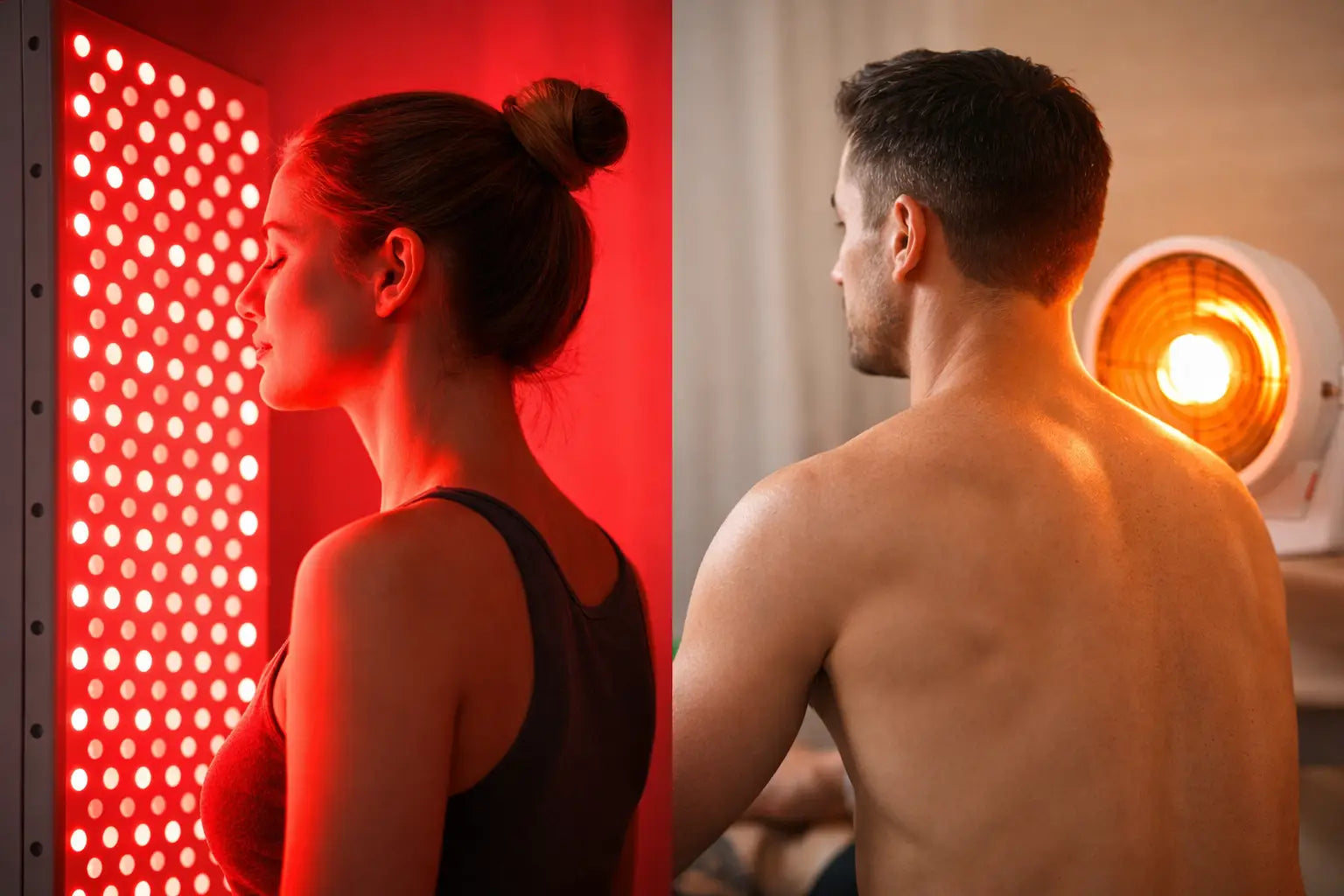
Red Light Therapy vs Infrared Explained
A lot of people use the terms interchangeably, then wonder why the experience feels completely different. That is the core confusion in red light therapy vs infrared: both use light beyond or near the visible spectrum, but they are not the same tool, they do not feel the same in use, and they are not always used for the same outcome.
If your goal is better skin, faster recovery, less stiffness, or a more deliberate home wellness routine, the distinction matters. Choosing the right modality changes how often you will use it, what benefits you are likely to notice, and whether it fits into your daily practice without friction.
Red light therapy vs infrared: the real difference
The cleanest way to think about it is this: red light therapy usually refers to specific visible red wavelengths and often near-infrared wavelengths delivered at targeted intensities for cellular support. Infrared is a broader category. It includes near-infrared, mid-infrared, and far-infrared, and it is often associated with heat-based applications like infrared saunas.
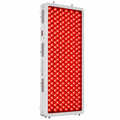
That broadness is where confusion starts. A red light therapy panel may include both red and near-infrared light. An infrared sauna usually relies more heavily on far-infrared heat. Both involve infrared energy in some form, but the mechanism and user experience are different.
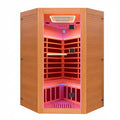
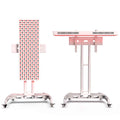
Red light therapy is generally more targeted and less about raising your core temperature. You stand or sit close to a panel for a defined session, often with little to no sensation of heat. Infrared, especially in a sauna setting, is usually a whole-body heat experience designed to warm tissue, promote sweating, and create a deeper sense of thermal recovery.
What red light therapy actually does
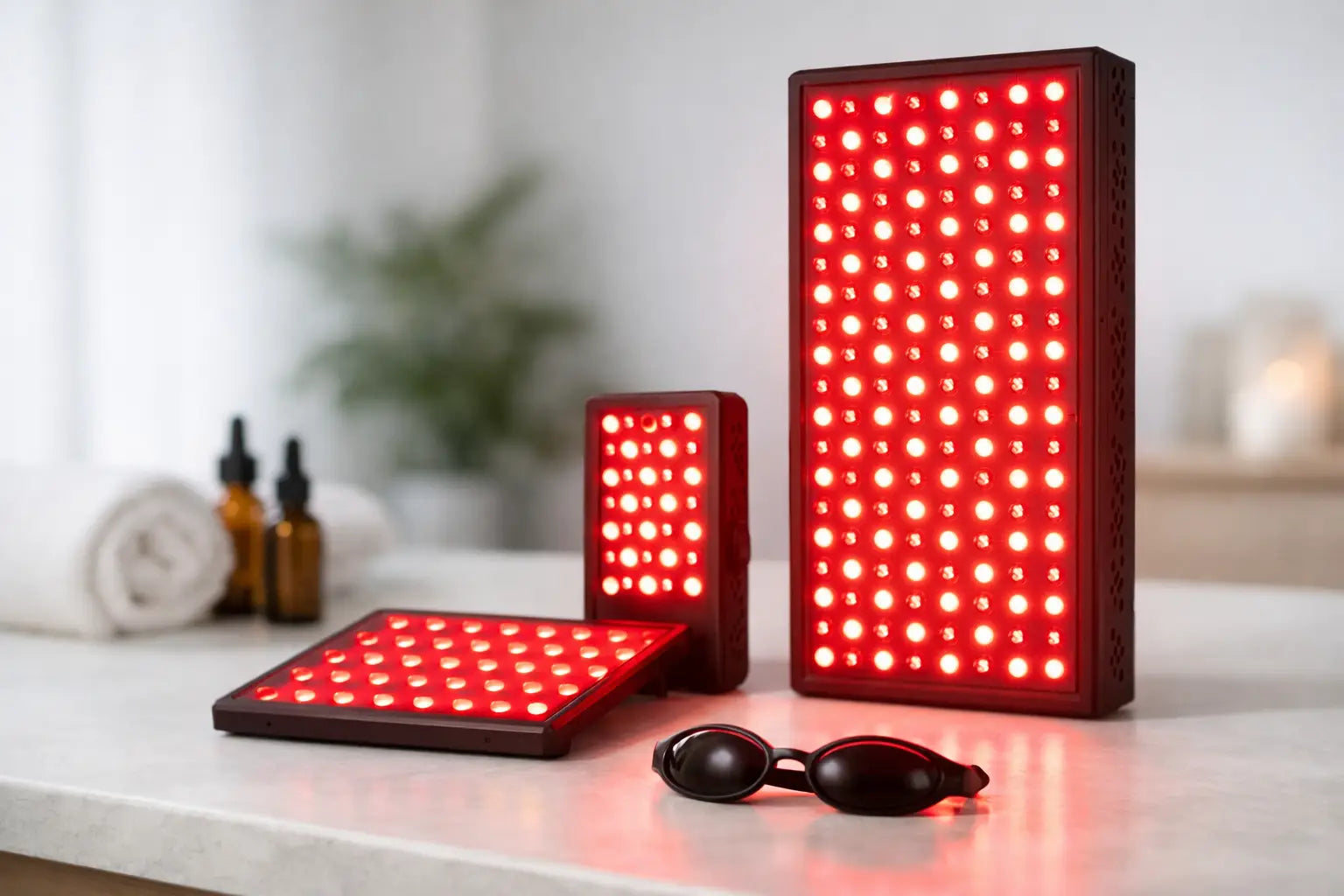
Red light therapy commonly uses wavelengths in the red range, often around 630 to 660 nanometers, and near-infrared, often around 810 to 850 nanometers. These wavelengths are studied for how they interact with mitochondria, cellular energy production, tissue repair, and inflammation pathways.
In practical terms, people usually choose red light therapy for skin quality, post-training recovery, joint comfort, and support for overall tissue health. Red wavelengths tend to be discussed more often in skin-focused protocols because they interact closer to the surface. Near-infrared travels deeper and is more often associated with muscles, joints, and deeper tissues.
This is why many premium panels combine both. The pairing gives you a more complete exposure profile without requiring separate devices or a more complicated setup.
The session itself is usually efficient. Ten to twenty minutes is common, and because the modality is not centered on intense heat, it can fit more easily into a morning routine, a post-workout reset, or an evening wind-down without demanding a full recovery block on your calendar.
What infrared usually means in wellness settings
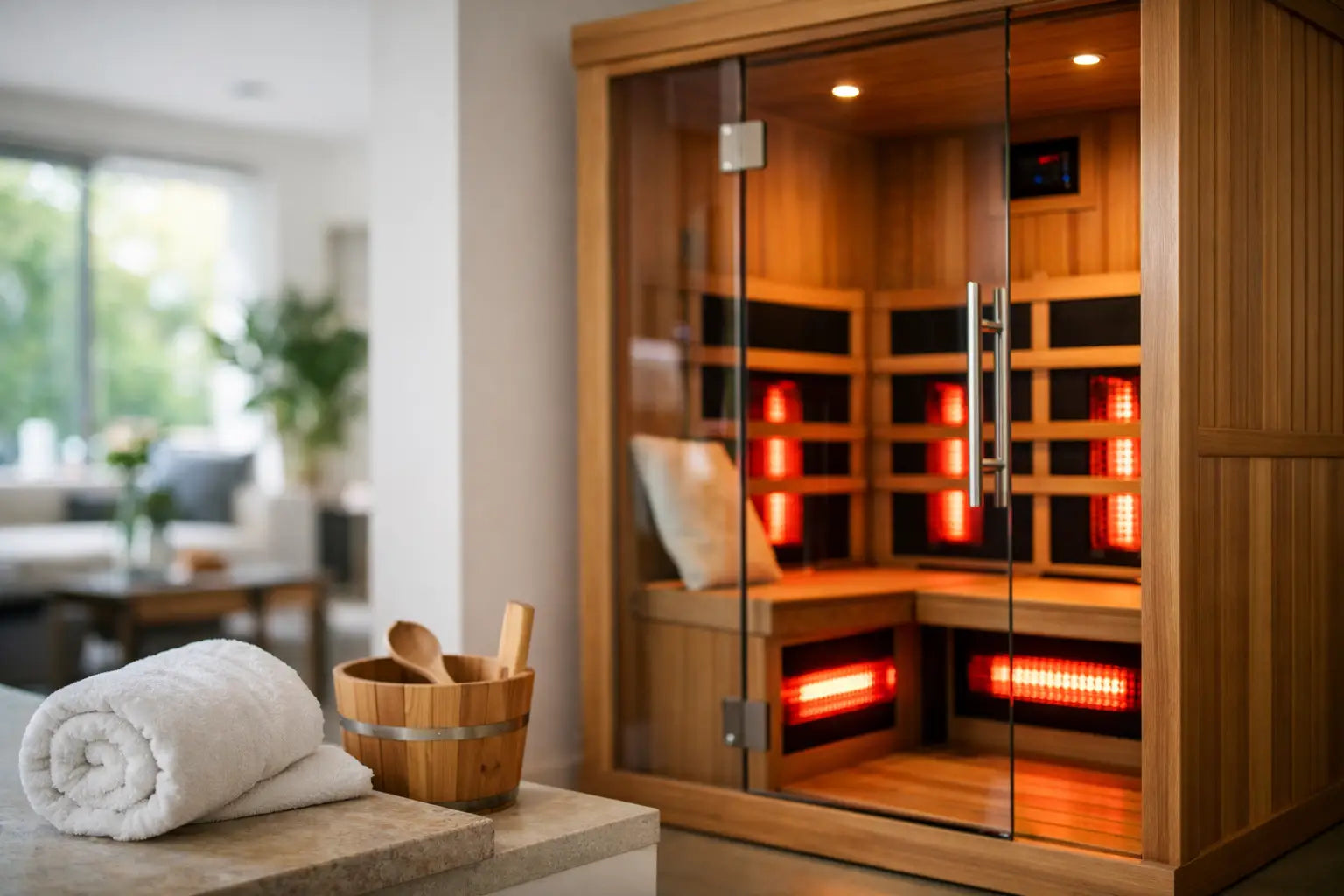
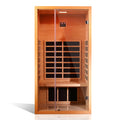
When people say infrared in a consumer wellness context, they often mean infrared heat. That could be an infrared sauna, sauna blanket, heating element, or another device designed to warm the body more directly than ambient air does in a traditional sauna.
Far-infrared is the wavelength range most associated with these heat-based systems. Its appeal is not subtle. You feel it. The body warms, circulation increases, sweat response builds, and the entire session has a more immersive character.
That makes infrared a strong fit for people who want the ritual of heat, the calming effect of stillness, and a modality that can support muscle relaxation, circulation, and decompression after long workdays or intense training. It is less targeted than a red light panel and more environmental in feel.
For some users, that is the advantage. It creates a dedicated recovery container. For others, it is a barrier. Heat tolerance, schedule constraints, hydration needs, and space requirements can all affect consistency.
Red light therapy vs infrared for skin, recovery, and performance
If skin is the priority, red light therapy usually has the clearer edge. It is the more common choice for supporting collagen, improving the look of tone and texture, and reducing the appearance of inflammation after cosmetic or environmental stress. Infrared heat can improve circulation and create a healthy glow, but it is not usually the first tool chosen for precision skin outcomes.
If deep muscle relaxation is the priority, infrared heat often feels more immediately satisfying. A sauna session can reduce perceived stiffness, help the body shift into a calmer state, and create a recovery ritual that feels substantial. Red light therapy can still support recovery at the tissue level, but the sensation is quieter and the payoff may feel more cumulative than dramatic.
For athletic recovery and performance support, it depends on the problem you are solving. If you want a fast, targeted session after training with minimal logistical burden, a red light panel is often the more efficient tool. If you want a broader parasympathetic reset, sweat response, and full-body warmth, infrared may fit better.
For joint comfort, both can have a place. Near-infrared light is commonly used in targeted recovery protocols, while infrared heat can help with general looseness and mobility. One is more precise. The other is more experiential.
Heat is not proof of effectiveness
This is one of the biggest misconceptions around red light therapy vs infrared. People often assume that if they do not feel much, the session is not doing much. That is not how these modalities work.
Red light therapy may produce very little heat, especially compared with a sauna. That does not make it weak. It simply means the goal is not primarily thermal. The benefit comes from wavelength, irradiance, treatment distance, and consistency over time.
Infrared heat, by contrast, is supposed to be felt. The warmth is part of the mechanism and part of the ritual. It can be deeply effective for the right use case, but the sensory intensity should not be confused with being universally better.
A disciplined routine is usually more valuable than chasing the most dramatic sensation.
How to choose the right modality for your home
The best choice depends on what you want to use consistently in real life. Not in theory. Not in a perfect future schedule. In your actual week.
If you want a low-friction modality for skin support, recovery, and daily use, red light therapy often wins. It asks for less setup, less thermal tolerance, and less dedicated time. It can live in a bedroom, gym, or recovery space and become part of a repeatable practice without taking over the room.
If you want a more immersive wellness ritual centered on heat, stillness, and full-body decompression, infrared may be the better investment. It has presence. It changes the feeling of a space and creates a stronger boundary around recovery time.
There is also the question of household adoption. A red light panel can be easier for multiple users to share because sessions are shorter and temperature is not a limiting factor. Infrared setups can be deeply rewarding, but they require more buy-in around time, space, and comfort with heat.
For premium home wellness buyers, aesthetics and integration matter too. The right modality is not only the one with the most compelling research. It is the one that fits your routine, your space, and your threshold for consistency.
Can you use both together?
Yes, and for many people, that is the most complete answer. Red light therapy and infrared heat are not always competitors. They often work well as complementary tools inside a larger recovery system.
A red light session in the morning can support energy, skin, and tissue recovery without slowing your day. An infrared sauna session later can become a dedicated transition out of training stress or work intensity. One is precise and efficient. The other is immersive and regulating.
This is often how advanced home wellness routines evolve. Not around one miracle device, but around a small number of modalities that each do a specific job well.
What to look for before you buy
If you are considering a red light device, pay attention to wavelength ranges, irradiance, treatment area, build quality, and whether the panel includes both red and near-infrared output. A premium device should feel intentional, not gadget-like.
If you are considering infrared, clarify which type of infrared is being used and whether the product is designed for therapeutic heat, convenience, or portability. Session comfort, material quality, and service support matter more at the premium end because these products become part of the architecture of your home routine.
This is where trust matters. A well-designed recovery product should not only perform. It should arrive with clarity, fit naturally into the home, and make disciplined use easier to sustain. That is the difference between a short-lived wellness purchase and a modality you return to for years.
The better question is rarely which one is superior in the abstract. It is which one helps you recover with more consistency, more calm, and less resistance. Choose the modality you will actually use, then let repetition do the work.