
Infrared Sauna vs Traditional Sauna
The difference between an infrared sauna vs traditional sauna becomes obvious the first time you sit in both. One wraps you in dense, high-heat air that rises fast and demands tolerance. The other feels quieter and more deliberate, warming the body at lower ambient temperatures with a steadier, less aggressive intensity. Both can earn a place in a serious recovery routine. The better choice depends on how you want heat to work inside your home and inside your schedule.
For buyers building a home wellness system, this is not a small detail. Sauna use is often less about a single session and more about repeatability. The best modality is usually the one you will use consistently, recover well with, and integrate into real life without friction.
Infrared sauna vs traditional sauna: the core difference
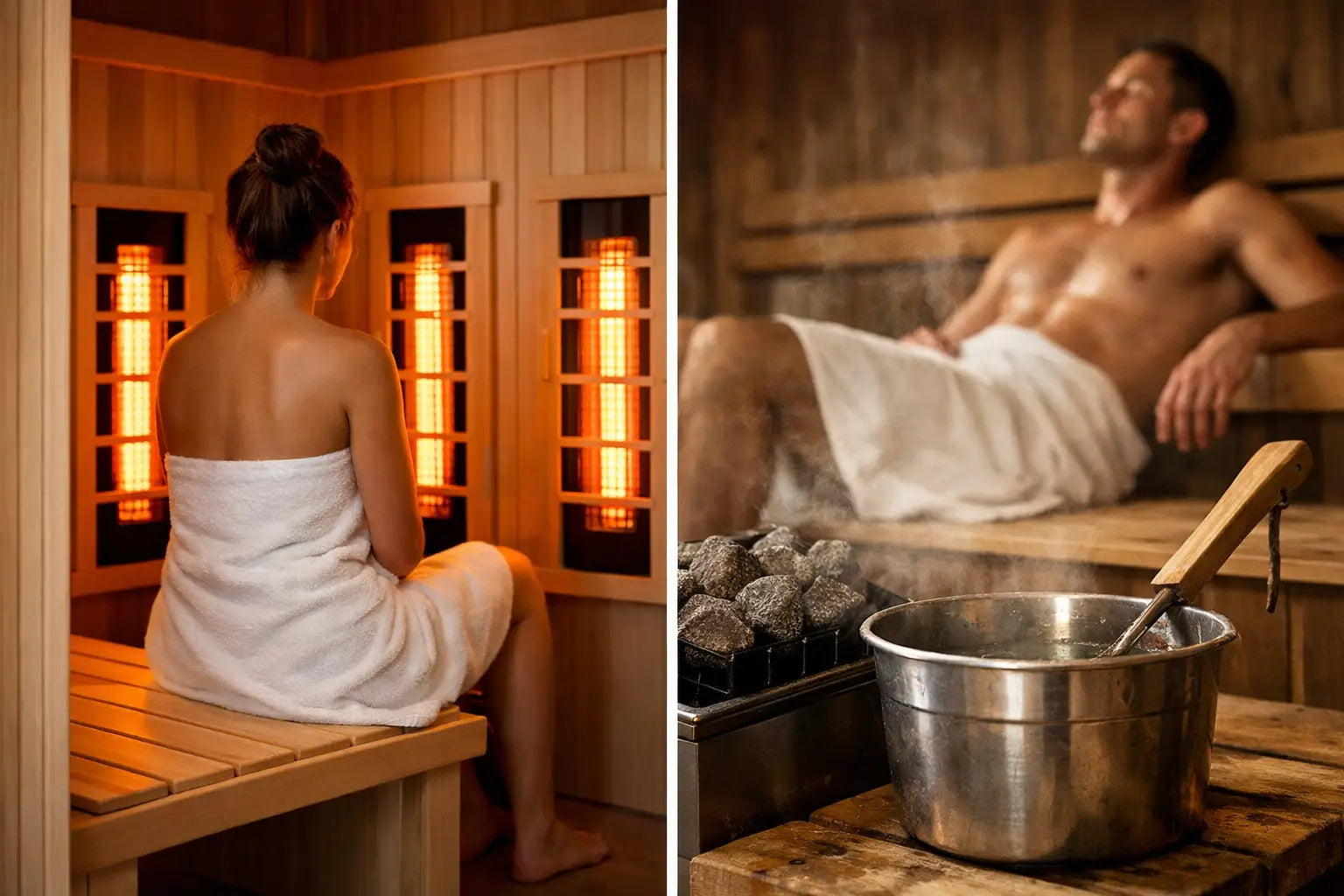
A traditional sauna heats the air around you, usually with an electric or wood-burning heater and sauna stones. That hot air then heats your skin and body. Temperatures often range from roughly 150 to 195 degrees Fahrenheit, sometimes higher depending on the setup and user preference. The room itself becomes intensely hot, and that full-room heat is part of the classic sauna experience.
An infrared sauna works differently. It uses infrared emitters to deliver radiant heat that warms the body more directly, often at lower air temperatures, commonly around 120 to 150 degrees Fahrenheit. The room gets warm, but not in the same saturated way as a traditional sauna. Many people describe it as a deeper, more targeted heat with less strain from breathing hot air.
That distinction shapes everything else, from comfort and session length to installation, energy use, and who tends to prefer one format over the other.
How the heat feels in practice
Traditional saunas are immersive. The heat is immediate, enveloping, and often intense from the first several minutes. For some people, that intensity is the point. It creates a ritual that feels ancient, athletic, and mentally clarifying. If you grew up with dry saunas, steam additions, or gym sauna culture, infrared can initially feel understated.
Infrared saunas are usually more approachable. Because the ambient temperature is lower, users who dislike extreme heat often stay in longer and tolerate sessions better. That matters if your goal is regular use four to six times per week rather than occasional high-intensity exposure.
Neither experience is inherently better. Traditional sauna tends to appeal to users who want stronger environmental heat and a more classic thermal contrast. Infrared often fits people who prioritize comfort, convenience, and a session they can sustain without feeling cooked.
Recovery, circulation, and the benefits people actually want
Most buyers are not choosing a sauna for the romance of hot wood alone. They want results: muscle recovery, better circulation, stress reduction, improved sleep, cardiovascular support, and a ritual that helps them downshift.
Both sauna formats can support these outcomes. Heat exposure in general has been associated with circulatory benefits, relaxation, and post-exercise recovery. The mechanism differs slightly in feel, but both can elevate heart rate, increase blood flow, and create the kind of thermal stress that many performance-minded users value.
Traditional sauna has more long-standing research behind general sauna bathing because it has been used at scale for much longer in its familiar form. Infrared sauna research is newer but growing, especially around perceived recovery, comfort, and use among people who may not tolerate very high heat well.
If your priority is cardiovascular-style heat stress and the classic sauna response, traditional has a strong case. If your priority is consistent use, lower-temperature comfort, and easier adoption at home, infrared often becomes the practical winner.
Infrared sauna vs traditional sauna for home installation
This is where the decision gets less philosophical and more concrete.
A traditional sauna usually requires more planning. It often needs stronger electrical considerations, greater heat tolerance in the build environment, and in some cases more involved ventilation and construction decisions. It also takes longer to preheat. If you are designing a dedicated wellness space from the ground up, that may be completely reasonable. But it is rarely the simplest option.
Infrared saunas tend to fit residential use more cleanly. Many models are designed for easier in-home placement, faster startup, and lower operating complexity. For buyers who want professional-grade wellness without a construction-heavy project, this matters. The difference between a modality you admire and one you use often is usually convenience.
That is one reason infrared has become such a strong category for design-conscious home wellness buyers. It aligns with modern routines. Step in, set the session, and begin without waiting for a room to reach extreme temperatures.
Energy use, warm-up time, and the reality of ownership
Traditional saunas generally use more energy per session because they are heating the air, the structure, and often the stones to a much higher temperature. They also tend to need more time before the session starts. If you enjoy a slower ritual and use your sauna as a dedicated event, this may not matter.
Infrared saunas are often more efficient and faster to get going. For busy professionals, parents, and athletes fitting recovery between meetings, training, and family life, that efficiency can be decisive. A modality that asks less friction from your day tends to win more sessions over time.
This is also where cost of ownership enters the picture. Initial product cost varies widely in both categories, but installation complexity and operating demands can make traditional sauna ownership more expensive over the long term. Premium buyers are not always looking for the cheapest option. They are often looking for the cleanest fit between performance, design, and ease.
Which sauna is better for detox, sweat, and skin?
This is where marketing often gets noisy.
Both infrared and traditional saunas can produce meaningful sweating. Traditional saunas often create faster, more dramatic sweat because the surrounding air is hotter. Infrared users may still sweat heavily, sometimes after a slightly longer ramp-up, because the body is being warmed directly.
Claims around detox should be approached with discipline. Sweating is a natural body process, but sauna should not be framed as a cure-all. A more grounded way to think about it is this: sauna can support a recovery routine that helps you feel lighter, calmer, and more physically reset. Many users also report skin benefits related to circulation and sweat response, though outcomes vary.
If skin health and post-session glow matter to you, both can play a role. Hydration, session frequency, and overall routine usually matter as much as the sauna type itself.
Who should choose infrared?
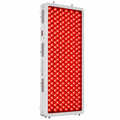
Infrared is often the right fit for buyers who want a refined, repeatable recovery tool at home. It tends to serve people who value comfort, lower ambient heat, quicker startup, and straightforward installation. It also fits users who are building a broader longevity stack and want a sauna that complements cold exposure, red light therapy, and other structured wellness practices without dominating the room or the routine.
For many households, infrared also wins on usability. If more than one person will be using the sauna, the more approachable format often gets used by more people, more often.
This is part of why premium residential wellness brands like HALOR lean into infrared as a serious home modality. It supports disciplined use, integrates well into modern spaces, and feels aligned with performance rather than theater.
Who should choose traditional?
Traditional is better for purists, high-heat enthusiasts, and anyone who wants the original sauna ritual with all its intensity. If you love the feeling of a very hot room, prefer the sensory weight of heated air, or want to recreate a spa, club, or Nordic-style sauna environment at home, traditional delivers something infrared does not.
It may also suit homeowners already planning a custom wellness build where construction complexity is less of a concern. In those cases, the classic experience can absolutely justify the added setup.
The trade-off is simple: traditional often gives you more environmental intensity, but usually with more prep, more heat tolerance required, and more installation commitment.
The better question is not which sauna is best
The better question is which sauna you will still be using six months from now.
If your ideal session is intense, ceremonial, and rooted in old-school heat, traditional sauna can be deeply satisfying. If your ideal session is consistent, efficient, and easy to integrate before work, after training, or before bed, infrared often makes more sense.
For most home users, especially those focused on recovery and longevity rather than nostalgia, infrared holds a practical advantage. It lowers the barrier to entry without lowering the value of the ritual. And in wellness, the routines that endure are usually the ones built with enough precision to fit your real life.
Choose the sauna that creates calm you can repeat, not just heat you can admire.