
Home Cold Plunge Buying Guide
A cold plunge looks simple until you try to buy one. Then you realize the category ranges from inflatable tubs with bags of ice to fully integrated systems built for daily use, precise temperature control, and a clean visual fit inside a modern home. A strong home cold plunge buying guide should help you separate novelty from equipment you will actually use three, four, or six times a week.
That distinction matters. The best cold plunge is not the one with the longest feature list. It is the one that matches your routine, your space, your tolerance for maintenance, and the level of performance you expect from a premium recovery tool.
What this home cold plunge buying guide should help you decide
Most buyers are evaluating more than cold exposure itself. They are asking whether a plunge will support recovery after training, sharpen focus in the morning, reduce friction around daily use, and feel considered enough to live in a primary residence. Those are different standards than buying a temporary wellness gadget.
If you want a cold plunge that becomes part of deliberate practice, start with the use case. Are you primarily recovering after strength sessions and endurance work? Are you using cold exposure for mood, alertness, and resilience? Do you want a compact setup for one person, or a more architectural piece that integrates into a home gym, patio, or spa-style bath environment? Your answers shape nearly every buying decision that follows.
Start with the type of system
There are three broad categories in the market, and each comes with trade-offs.
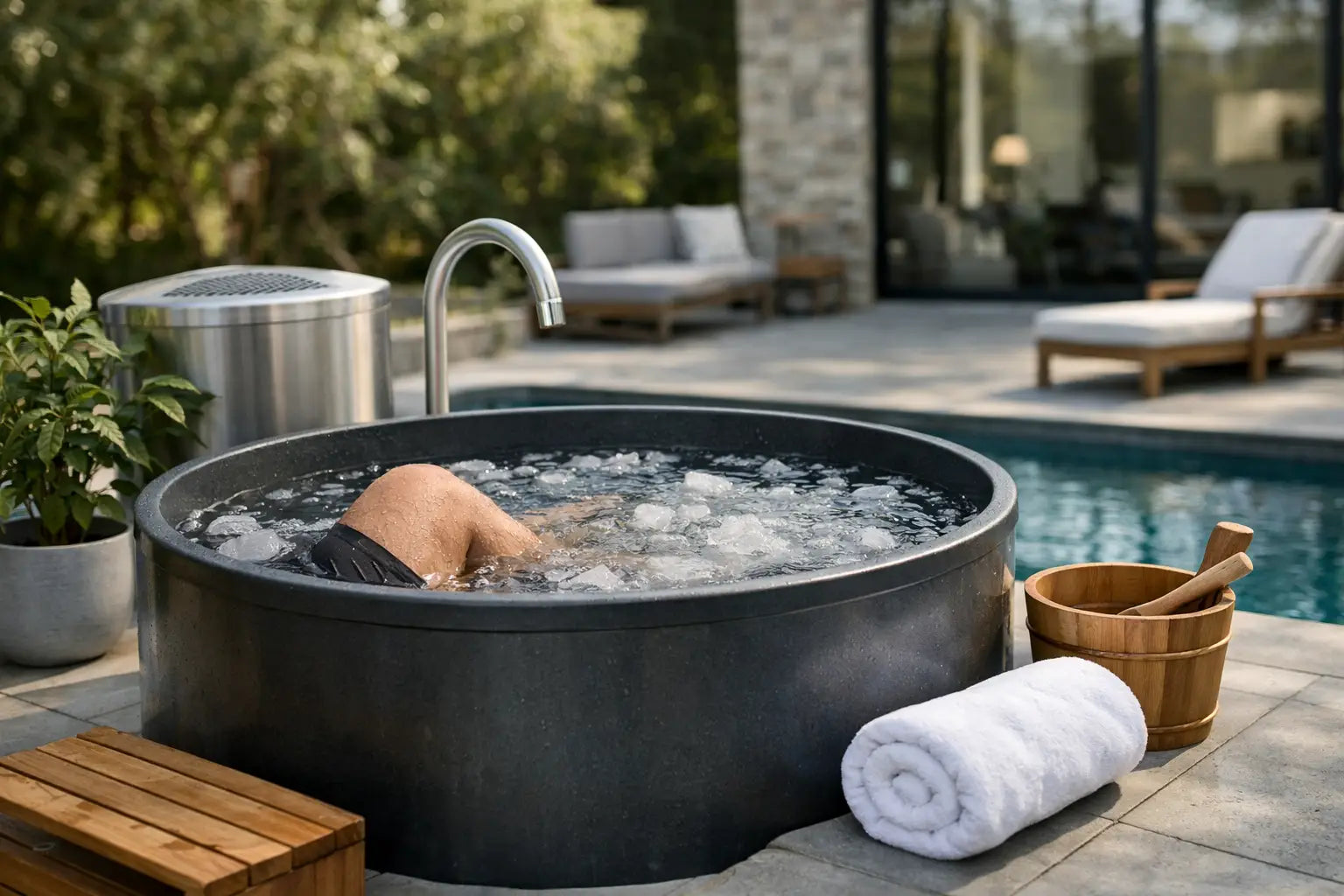
Ice-fed tubs are the lowest barrier to entry. They can work if you are testing the habit or only plunging occasionally, but they are rarely ideal for long-term residential use. Temperature is inconsistent, prep time adds friction, and the ritual becomes dependent on buying, storing, and hauling ice. For disciplined users, that friction tends to erode consistency.
Portable tubs with external chillers sit in the middle. They offer active cooling, better repeatability, and a more manageable footprint. This category can be a smart option if flexibility matters, though quality varies widely. Some systems feel stable and refined. Others look temporary, produce noticeable noise, or require more maintenance attention than buyers expect.
Integrated premium cold plunges are built for regular use. The tub, chiller, filtration, and circulation are designed as one system, often with cleaner lines and stronger insulation. They generally cost more upfront, but they reduce compromises in temperature consistency, sanitation, durability, and visual presence. If your goal is a lasting home recovery setup, this category tends to make the most sense.
Temperature control matters more than minimum temperature
Many shoppers fixate on how cold a unit can get. In practice, precision and consistency matter more than chasing the lowest possible number.
For most users, an operating range in the upper 30s to mid 50s is more than enough. What you want is a system that reaches target temperature reliably, recovers efficiently between sessions, and holds that temperature in real-world conditions. A plunge that advertises extreme lows but struggles in a warm garage or sunny backyard is less useful than one that performs steadily every day.
Pay attention to insulation, chiller strength, and ambient climate. A unit placed outdoors in Arizona has different demands than one installed indoors in a climate-controlled room. If you live in a hot region or want year-round outdoor performance, cooling capacity becomes a serious buying factor, not a technical footnote.
Filtration, sanitation, and water care are where good intentions fail
A cold plunge should feel clean, clear, and ready. If the maintenance process feels vague or labor-intensive, usage often drops.
Look closely at the filtration system. Continuous or scheduled water circulation, paired with effective filtration, helps keep the water usable between changes. Sanitation options also matter. Some systems rely on ozone, some use UV, and some require a more manual chemical routine. None of these approaches removes maintenance entirely, but better systems reduce the workload and create more predictable upkeep.
This is where cheaper units often reveal their true cost. If water turns cloudy quickly, if components are difficult to access, or if cleaning requires partial disassembly, ownership becomes less calm and more administrative. For a premium wellness product, that is a poor trade.
Size, depth, and ergonomics decide whether the plunge feels restorative or awkward
A product photo can hide a lot. A tub may look sleek online and still feel cramped in practice.
Check the interior dimensions, not just the exterior footprint. You want enough depth to immerse meaningfully, enough length to sit without compression, and enough support to keep your posture stable while breathing settles. Taller users should be especially careful here. A plunge that forces your knees high or leaves too much of the upper body exposed can make sessions feel less controlled.
Ergonomics also affect adherence. Entry height, step-in ease, seat angle, and surface finish all shape the experience. Cold exposure is already demanding. A thoughtful tub design makes the session feel composed rather than awkward.
Placement is not a minor detail
A home cold plunge buying guide should treat placement as a primary decision, because where the unit lives influences noise, drainage, convenience, and the likelihood that you will keep using it.
Indoor placement offers climate stability and privacy, but you need to think about moisture, flooring, access for delivery, and proximity to power and drainage. Outdoor placement can feel more atmospheric, especially for morning exposure, yet it introduces weather, debris, UV wear, and temperature load on the system.
Also consider the path between your routine and the plunge. If it is too far from the gym, sauna, shower, or changing area, the ritual becomes less elegant. Convenience is not a luxury. It is one of the strongest predictors of repeated use.
Build quality shows up in silence, stability, and finish
Premium buyers should expect more than cooling performance. Materials, panel fit, hardware quality, insulation, and overall finish shape the ownership experience.
Look for a tub that feels structurally confident. Thin walls, visible wobble, exposed plumbing, or loud operational noise can make even a technically functional plunge feel out of place in a refined home environment. By contrast, a well-built unit communicates stillness. It holds temperature, sounds controlled, and looks intentional in the space.
Aesthetic fit is not superficial. When recovery equipment aligns with the architecture of your home, it is easier to keep the practice visible and consistent. Design can support behavior.
Support, delivery, and installation are part of the product
This is one of the most overlooked parts of the category. A cold plunge is not a supplement order. It is a large-format wellness appliance with setup requirements, maintenance questions, and a learning curve.
Before buying, look at what happens after checkout. Is there white-glove delivery? Is in-home placement available? Who handles installation questions? What does the warranty actually cover, and for how long? If the chiller has an issue six months in, is support responsive and specialized, or are you sent into a generic ticket queue?
For premium residential buyers, service infrastructure matters almost as much as the tub itself. A strong brand reduces uncertainty and helps the practice feel accessible from day one. That is especially valuable if this is your first serious home recovery investment.
The real budget is ownership, not sticker price
It is easy to compare cold plunges by upfront cost alone, but that misses the larger equation.
Lower-priced units may require more maintenance supplies, more water changes, more troubleshooting, and earlier replacement. They may also carry hidden costs in setup limitations, weak insulation, or poor reliability. A more expensive system can be the better value if it delivers steady performance, cleaner water, stronger materials, and service that protects the investment.
Financing can also change the calculus for some buyers. If a plunge supports a daily recovery practice you would otherwise pay for elsewhere through spa visits or studio memberships, monthly payment structure may matter more than absolute purchase price. The right decision depends on how central cold exposure is to your routine.
A final filter for choosing the right plunge
If you are still comparing options, ask one simple question: will this system make the habit easier or harder six weeks from now?
The right cold plunge is not just cold. It is consistent, quiet, clean, well-supported, and proportioned for the way you live. It should feel like a permanent part of a disciplined home environment, not a compromise you tolerate because the idea of cold exposure sounded good.
For serious buyers, that is the standard. Choose the plunge that creates clarity around the ritual, removes friction from the setup, and earns its place in your home through daily use. HALOR’s approach to recovery equipment is built around that same principle - performance first, with the calm and confidence premium ownership should bring.