
Infrared Sauna Buyer Guide for Your Home Gym
The best home sauna is not the one with the longest feature list. It is the one you will use three or four times a week without turning the session into a logistical project. A serious infrared sauna buyer guide starts with that standard: heat quality, physical fit, electrical requirements, and ownership support all matter more than a dramatic product claim.
Infrared heat gives many people a more approachable way to build a consistent heat practice at home. The air temperature is typically lower than in a traditional sauna, while infrared emitters warm the body directly. For a professional, athlete, or longevity-minded household, that can mean a calm, repeatable recovery ritual that fits between training, work, and sleep.
Start With the Routine You Want to Keep
Before comparing wood finishes or control panels, decide how the sauna will live in your week. Will it be a 20-minute decompression practice after strength training? A quiet morning session before the house wakes up? A shared evening ritual for two? Your answer should shape the cabin size, placement, and heat configuration.
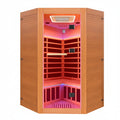
A one-person sauna conserves floor space and often heats more efficiently. It is a disciplined choice for a single daily user. A two-person model gives one person room to stretch out, allows a partner to join, and generally feels less confining. Larger cabins can be useful for families, but more interior volume means more space to heat, more electrical planning, and a larger visual footprint.
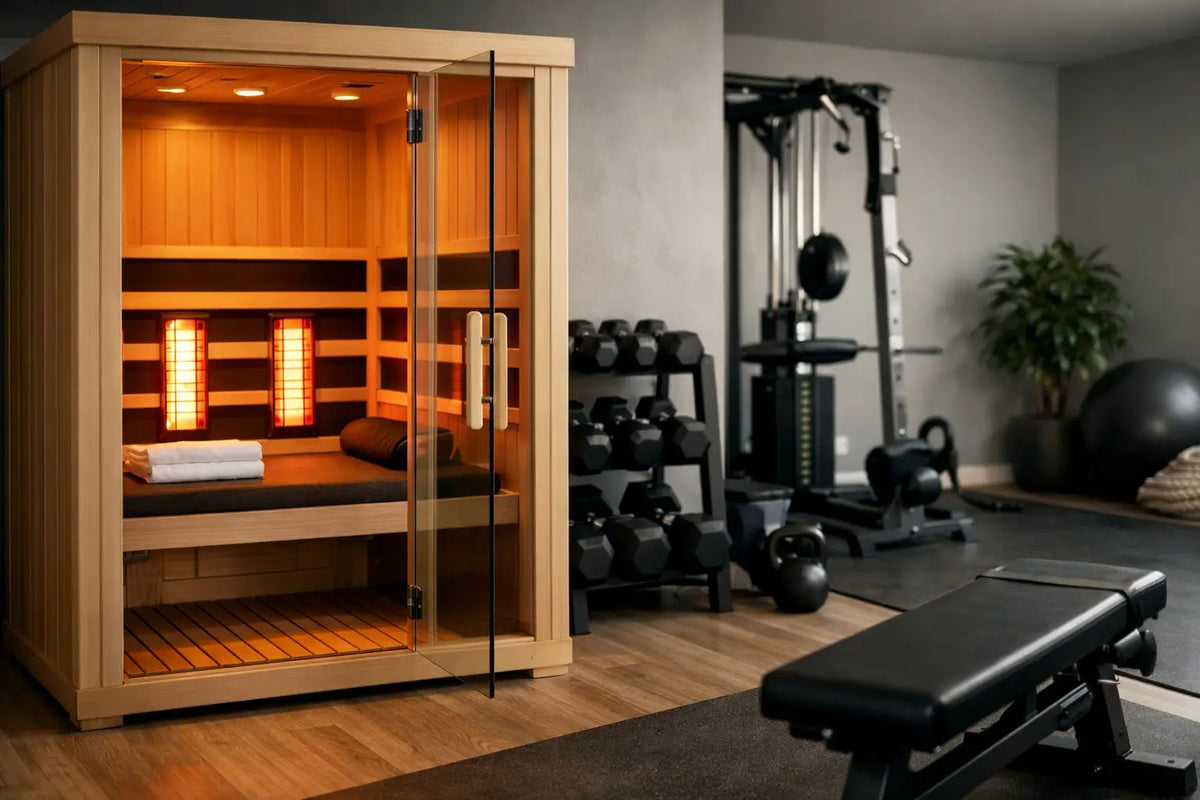
Measure the actual route into the home, not only the final room. Account for stairs, doorways, elevators, low ceilings, and the clearance needed to assemble panels. A premium sauna should feel intentionally placed, whether it sits in a home gym, primary suite, covered wellness room, or finished basement. It should not become an obstacle you work around.
Infrared Sauna Buyer Guide: Choose the Heat System
The heater system is the center of the buying decision. Most infrared saunas use carbon, ceramic, or a combination of both. Each can produce effective heat. The meaningful differences are coverage, feel, control, and how the sauna is engineered as a whole.
Carbon, Ceramic, and Full-Spectrum Claims
Carbon panels generally provide broad, even radiant coverage across a large surface area. They are often favored by buyers who want a gentler, more enveloping heat experience. Ceramic emitters can feel more concentrated and intense, which some users prefer for shorter or more targeted sessions.
Some models pair multiple emitter types under the label “full spectrum.” This language usually refers to near-, mid-, and far-infrared wavelengths. It can be useful, but it is not a guarantee of a better sauna. Ask where the emitters are placed, whether they produce meaningful coverage at seated positions, and whether the system allows practical temperature and session control.
Do not choose based on a wavelength chart alone. The strongest long-term research around sauna bathing often comes from traditional Finnish sauna use, and those findings cannot be automatically transferred to every infrared product. Infrared saunas are still compelling because many people find the lower-air-temperature environment easier to use consistently. Adherence is a performance feature.
Heat-Up Time and Temperature Range
A sauna that reaches a usable temperature promptly is easier to incorporate into real life. Check expected heat-up time under normal indoor conditions rather than relying on an idealized claim. A model may also perform differently in a cold garage than in a climate-controlled room.
Higher maximum temperatures are not automatically better. Many infrared users are comfortable in the range of roughly 110 to 150 degrees Fahrenheit, depending on the cabin, humidity, hydration, and personal tolerance. Look for stable temperature control and a session experience that feels calm rather than punishing.
EMF and Electrical Design
Low-EMF language is common in the category, but buyers should look beyond a simple badge. Ask how measurements are taken, at what distance, and whether the readings cover the full seating area. The electrical layout, shielding approach, wiring quality, and heater placement all contribute to the finished environment.
This is also where a well-built sauna distinguishes itself. Clean cable management, protected connections, reliable controls, and properly fitted panels are not glamorous details. They are the foundation of a product you can use with confidence for years.
Materials Affect the Experience Every Day
Wood shapes the interior atmosphere, thermal feel, and maintenance requirements. Hemlock is widely used because it is stable, clean-looking, and relatively low in aroma. Cedar has a richer scent and more distinctive grain, which some owners love, though its fragrance can be too pronounced for people with sensitivities. Basswood is another popular low-odor option with a refined, light appearance.
Focus on the complete interior, including benches, backrests, flooring, and trim. Look for smooth finishes, secure bench construction, and wood that feels substantial under body weight. The cabin should be free of harsh chemical odors. If a manufacturer discusses adhesives, finishes, and material sourcing clearly, that is usually a positive signal.
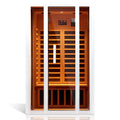
Glass also deserves attention. A full-glass front creates openness and can make a compact cabin feel less enclosed, but glass naturally releases heat faster than insulated wood panels. This is a reasonable trade-off when the sauna has enough heating capacity and you value a lighter architectural look. Tinted or privacy glass may suit a more secluded recovery room.
Plan the Room Before You Buy
An infrared sauna is often easier to install than a traditional sauna, but it is still a substantial home appliance. Most units need a level, dry indoor surface and adequate clearance around the exterior. Confirm ceiling height with room to spare, especially if you are placing the sauna beneath a sloped ceiling or near overhead storage.
Power Requirements Are Not a Footnote
Smaller saunas may plug into a standard 120V outlet, while larger or higher-output models may require a dedicated 240V circuit. Never assume an available outlet is sufficient. Confirm the sauna’s voltage, amperage, plug type, circuit requirement, and local electrical code before delivery.
A licensed electrician can assess the panel capacity and install a dedicated circuit when needed. This step is straightforward when handled early and frustrating when discovered after a large crate has arrived. If you are building a dedicated recovery space, coordinate the electrical plan with lighting, ventilation, flooring, and any cold plunge or red light therapy equipment.
Ventilation, Flooring, and Cleaning
Infrared saunas do not create the dense steam of a steam room, but heat and perspiration still call for sensible room planning. A dry, ventilated area is preferable. Avoid placing the sauna where moisture can become trapped against walls or beneath the base.
Use a stable floor that can handle the unit’s weight and routine cleaning. Many owners use towels on the bench and floor during sessions, then wipe down interior touchpoints afterward. Letting the cabin air out between uses keeps the space fresh without overcomplicating maintenance.
Evaluate Comfort Features With Restraint
A Bluetooth speaker, chromotherapy lighting, and app controls may enhance the ritual, but they should not distract from the fundamentals. A well-designed bench, back support, easy-to-read control panel, and door that closes cleanly matter more than novelty features.
Consider whether the controls are reachable while seated, whether the display is easy to read in low light, and whether timers can be set without interrupting the session. For taller users, interior height and bench depth are critical. If you cannot sit comfortably with your feet supported and your back relaxed, the sauna will feel smaller than its advertised capacity.
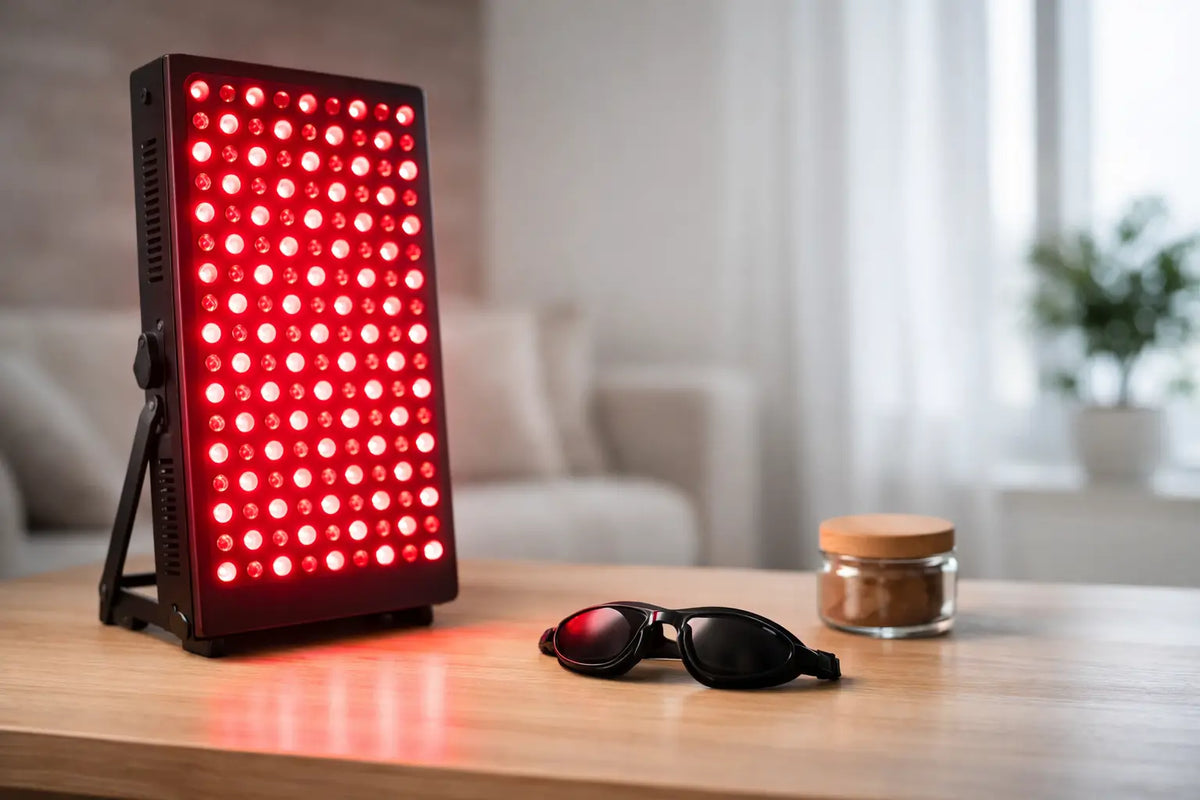
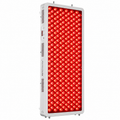
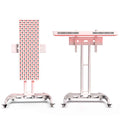
Red light panels integrated into a sauna can be convenient, but they are not necessarily equivalent to a dedicated red light therapy device. Effective light therapy depends on wavelength, irradiance, treatment distance, and exposure time. Treat the two modalities as related but distinct unless the specifications make a clear case otherwise.
Service Is Part of the Product
A premium sauna purchase should include a clear plan for delivery, assembly, warranty coverage, and support. Ask whether delivery is curbside or room-of-choice, whether in-home installation is available, and who handles damaged components or future service needs. Large wellness equipment is easy to buy online and much harder to resolve when something goes wrong.
Read the trial and return terms before ordering. A home trial is valuable only when the process, pickup expectations, and potential fees are plainly stated. Warranty length matters, but so do exclusions for heaters, controls, wood, labor, and freight. Strong support infrastructure protects the investment and removes friction from adoption.
For many households, this is where a curated provider such as HALOR has real value: the sauna is treated as part of a complete home recovery practice, not a boxed commodity left at the curb.
Make the Decision Based on Use, Not Hype
The right infrared sauna may be a compact, 120V cabin in a primary suite or a larger, professionally installed model beside a training space. It depends on your available space, electrical capacity, heat preference, and the people who will use it. What should remain constant is build quality, transparent specifications, and a service experience that respects the scale of the purchase.
Choose the sauna that makes stillness easier to practice. When the room is ready, the heat is consistent, and the session fits naturally into your schedule, recovery stops being another task to manage and becomes part of how you live at your peak.