
Cold Plunge Versus Cryotherapy: Which Fits?
The decision is rarely about whether cold works. It is about which form of cold exposure you can use with enough consistency to make it part of your recovery standard. In the cold plunge versus cryotherapy conversation, the meaningful differences are duration, delivery, cost, sensation, and whether the practice belongs in your home or in someone else’s facility.
Both modalities expose the body to cold stress. Both can leave you feeling alert, composed, and physically reset. But they create distinctly different rituals. Cryotherapy is brief, intense, and appointment-based. A cold plunge is immersive, adjustable, and built around deliberate repetition.
Cold plunge versus cryotherapy: the core difference
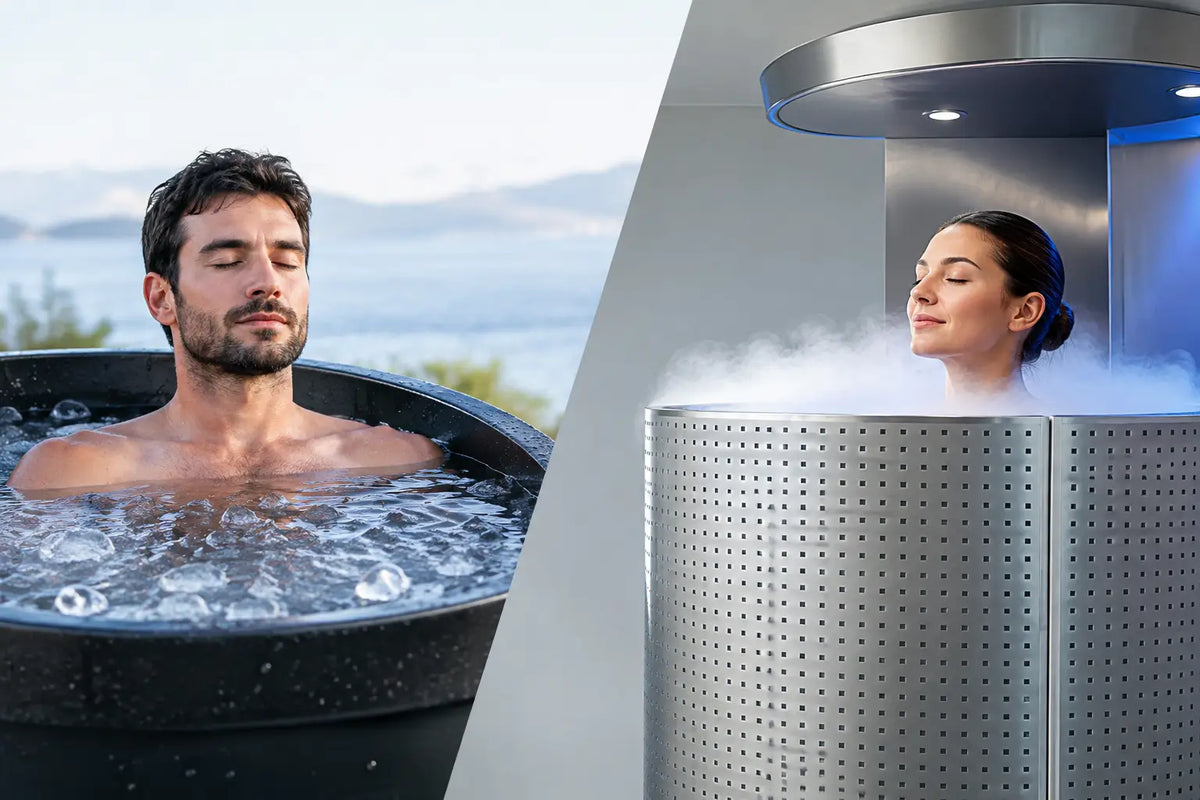
Whole-body cryotherapy typically involves standing in a chilled chamber for two to three minutes. The air is extremely cold, often between minus 166 and minus 220 degrees Fahrenheit, while your head remains outside the chamber in many systems. The goal is rapid skin cooling through very cold, dry air.
A cold plunge places most of the body in cold water, generally for two to 10 minutes depending on water temperature, experience, and goals. Water transfers heat away from the body far more efficiently than air. That means 50 degrees in a plunge can feel far more demanding than the number alone suggests.
This difference shapes the experience. Cryotherapy is designed for a short, high-intensity blast. A plunge creates a controlled encounter with breath, posture, and composure. You enter, settle your breathing, and remain present through the initial stress response. For many people, that repeatable practice is as valuable as the temperature itself.
What each modality may support
Cold exposure has been studied for its effects on perceived muscle soreness, mood, alertness, and stress response. After demanding training, cold water immersion may reduce the feeling of soreness and fatigue. Many users also report a clear lift in energy and focus after a session, likely related in part to the body’s acute sympathetic response.
The science requires context. Cold exposure is not a cure for inflammation, chronic pain, depression, or metabolic disease. Results vary by protocol and person. And while cold water can be useful after competition or a particularly punishing training block, using it immediately after every strength workout may not be ideal if your primary goal is muscle growth. Some research suggests frequent post-lifting cold immersion may blunt aspects of the adaptation signal that helps build muscle.
That does not make cold a poor recovery tool. It makes timing matter. Use it strategically after endurance events, high-volume training, hard field sessions, or on days when you want to feel recovered for the next demand. If hypertrophy is the priority, consider separating your plunge from resistance training by several hours or reserving it for rest days.
Cryotherapy research is less extensive than the research on cold water immersion, and its outcomes are harder to compare because chamber temperatures, exposure times, and protocols differ. It may offer similar short-term benefits for perceived soreness and wellbeing, but the extreme temperature does not automatically mean superior recovery. More cold is not always more useful.
The practical case for a cold plunge
A home plunge removes the friction that weakens most wellness routines. There is no commute, booking window, or dependency on a studio’s operating hours. The session can happen before work, after training, or at the end of a long travel day, when the need for a reset is real rather than convenient.
It also offers more control. With a quality temperature-controlled system, you can set a challenging but sustainable temperature, often beginning around 55 to 60 degrees Fahrenheit before progressing lower. You can control duration, track what feels productive, and develop a protocol that fits your physiology rather than accepting a one-size-fits-all session.
There is a financial distinction as well. Cryotherapy usually carries a recurring per-session or membership cost. For someone who uses cold exposure occasionally, that may be reasonable. For someone committed to three, four, or more sessions each week, the arithmetic changes. A residential plunge is a larger upfront investment, but it turns a recurring service into a durable part of the home recovery environment.
For HALOR customers, that matters beyond convenience. The most effective recovery room is one you actually use. A well-designed plunge can sit alongside an infrared sauna, training space, or quiet morning routine without feeling like clinical equipment added as an afterthought.
Where cryotherapy has an advantage
Cryotherapy is not obsolete simply because a plunge can live at home. It can be appealing for people who strongly dislike water immersion, want the shortest possible exposure, or prefer the structure of a recovery studio. The dry cold may also feel more tolerable to some users, even when the chamber temperature is far lower than a plunge’s water temperature.
It is also easier to try without making a major purchase. A few sessions can help you determine whether you enjoy cold exposure at all. If the experience gives you a meaningful boost in mood or post-training readiness, it can serve as an introduction to a more consistent practice.
Still, the short appointment is not inherently a better protocol. Cryotherapy’s convenience depends on access. A three-minute chamber session becomes a 45-minute commitment once travel, changing, and waiting are included. For a high-performing professional, the real premium is often time.
Safety is part of the protocol
Cold exposure should feel demanding, not reckless. The goal is a measured stressor followed by recovery, not a test of willpower. Start conservatively with water around 55 to 60 degrees Fahrenheit and one to three minutes. Build only when your breathing remains controlled and you can warm up comfortably afterward.
Avoid alcohol before cold exposure. Never plunge alone if you are inexperienced, and do not hyperventilate before entering the water. Rapid breathing exercises near water can increase risk. Enter slowly, keep your face above water, and exit if you feel chest pain, dizziness, numbness that feels concerning, confusion, or panic that does not settle.
People with cardiovascular disease, uncontrolled high blood pressure, arrhythmias, Raynaud’s phenomenon, circulation concerns, neuropathy, pregnancy-related considerations, or other relevant medical conditions should speak with a qualified clinician first. The cold shock response can sharply affect breathing, heart rate, and blood pressure. Precision starts with knowing when a modality is not appropriate.
How to choose the right recovery investment
Choose cryotherapy if you want to sample cold exposure, prefer dry air to water, or expect to use it only occasionally. It is an efficient service for a specific moment, particularly if a reputable facility is close to your routine.
Choose a cold plunge if cold exposure is becoming a practice rather than an event. It offers greater control over temperature and duration, supports frequent use without appointments, and creates a physical cue for recovery at home. The initial commitment is higher, so product quality, insulation, filtration, sanitation, service access, and installation support should carry real weight in the decision.
Do not choose based on the most extreme temperature or the loudest promise. Choose the format that fits your schedule, training demands, health profile, and tolerance for cold. A sustainable 10-minute ritual three times a week is more valuable than an intense session you repeat twice a year.
The best cold protocol is not the one that looks most severe. It is the one that brings a little more calm, clarity, and readiness to the life you intend to sustain.