
Cold Plunge After Lifting: Good or Bad?
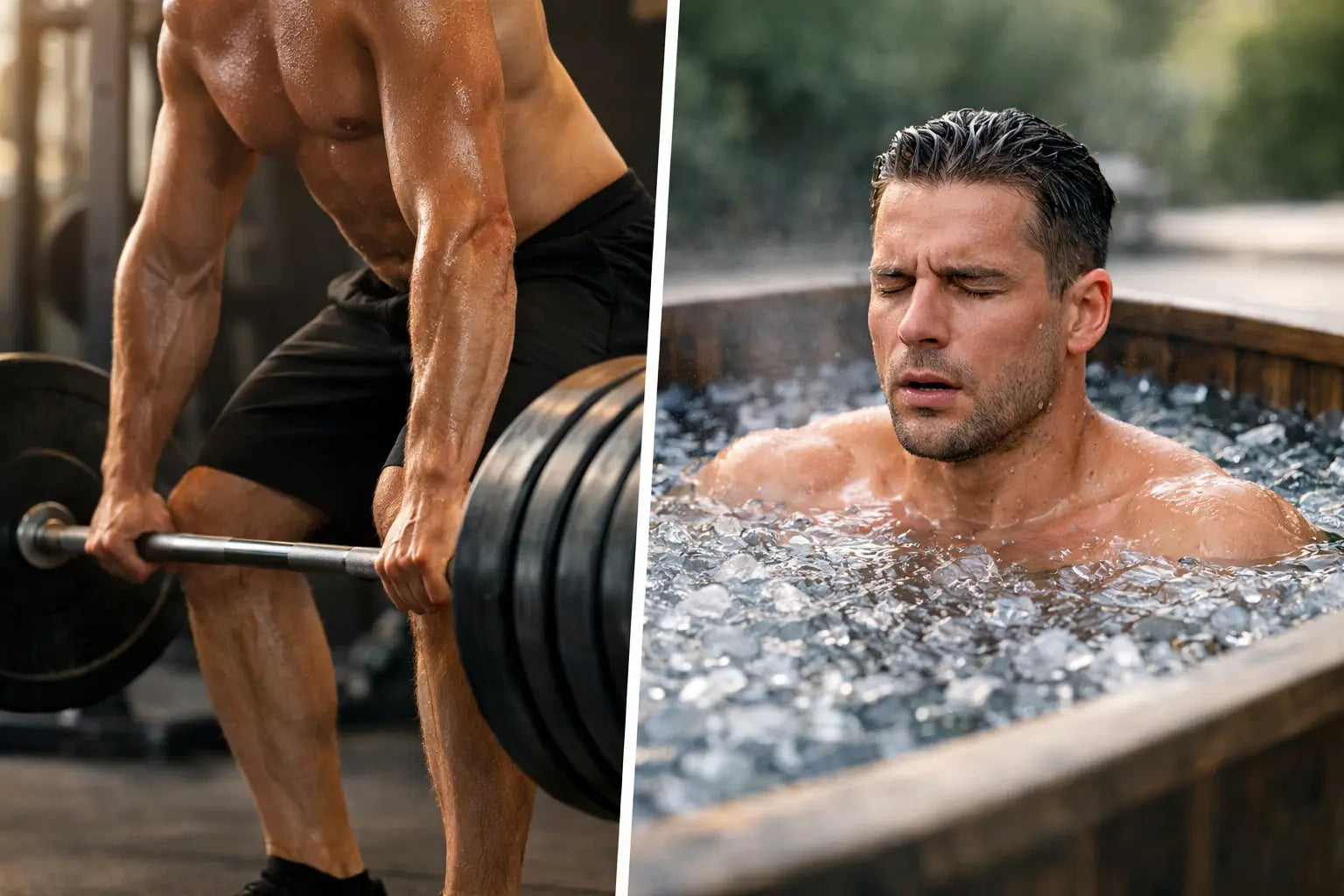
You finish a hard strength session, your legs are heavy, your core temperature is up, and the idea of cold water sounds equal parts brutal and appealing. That is usually the exact moment people ask whether a cold plunge after lifting is a smart recovery move or a mistake. The honest answer is not yes or no. It depends on what you want your training to do.
Cold exposure can reduce soreness, bring the nervous system into a calmer state, and help you feel sharper later in the day. But used at the wrong time, especially after hypertrophy-focused training, it may interfere with some of the cellular signals that support muscle growth. If your goal is performance, recovery, and longevity, timing matters more than the trend itself.
What happens during a cold plunge after lifting
A cold plunge creates a fast environmental stressor. Blood vessels near the skin constrict, tissue temperature drops, and the body starts working to preserve core heat. Many people notice a clear mental shift within minutes - less heat, less swelling, more alertness, and a distinct sense of stillness after the discomfort passes.
After lifting, that response can feel productive because resistance training already creates local inflammation, muscle damage, and fatigue. Cooling the body may reduce perceived soreness and improve short-term recovery, especially if the session was intense, high volume, or physically taxing in the heat.
This is where nuance matters. Not all post-workout inflammation is bad. Some of it is part of the adaptation process. Strength training triggers signaling pathways that help muscle tissue repair and grow stronger. If you aggressively suppress that process right after training, you may trade some long-term adaptation for short-term comfort.
When cold plunge after lifting can help
If your priority is feeling recovered for your next session, cold exposure can be useful. Athletes in dense training blocks, people training multiple times per week, and anyone balancing lifting with work stress or poor sleep often value reduced soreness more than maximizing every possible hypertrophy signal.
There is also a difference between training goals. If you are lifting for general fitness, body composition, resilience, or metabolic health, a cold plunge after lifting may fit well into your routine. You may recover better subjectively, sleep more deeply, and return to training with less drag.
It can also be a practical tool after sessions built around conditioning, circuits, sled work, loaded carries, or sport-specific fatigue rather than pure muscle gain. In those cases, restoring freshness may matter more than preserving every inflammatory cue.
For some people, the biggest benefit is nervous system regulation. A well-executed plunge followed by slow breathing often creates a noticeable shift from sympathetic drive to a more composed state. That matters if training is one more stressor in an already crowded day.
When it may work against your goals
If your main objective is building muscle, immediate cold exposure is less compelling. Research has suggested that post-lift cold water immersion can reduce some anabolic signaling and may blunt hypertrophy over time when used consistently after resistance training.
That does not mean one plunge ruins progress. It means routine matters. If every strength session ends with a cold plunge, and your program is specifically designed for size and muscular adaptation, you may be making the tradeoff in the wrong direction.
This is especially relevant after lower-body sessions with heavy compound lifts, eccentric volume, or targeted hypertrophy work. Those sessions create the exact local stress your body needs to adapt to. Cooling the tissue immediately afterward may reduce part of that response.
There is also a practical issue. Some people mistake numbness for recovery. Feeling less sore does not always mean the tissue has recovered faster in a meaningful way. It may simply mean discomfort is lower. That can still be helpful, but it is worth being clear about what problem you are solving.
The best timing depends on the goal
For muscle growth, the cleanest strategy is simple: do not plunge immediately after lifting. Give your body time to initiate the repair process. Many coaches and performance practitioners prefer separating cold exposure from strength work by at least several hours. If you lift in the morning, cold later in the day is usually a more balanced approach.
For general recovery, conditioning-heavy training, or competition schedules, a cold plunge sooner after exercise can make sense. In that setting, reducing soreness and restoring readiness may be the priority.
If you train for both performance and physique, use a selective approach. Save immediate post-workout plunges for days when you need faster recovery, not as an automatic ritual after every session.
How cold is too cold
Colder is not always better. Extremely cold water increases the shock response and can make the session harder to control. For most people, a range around 50 to 59 degrees Fahrenheit is enough to create a meaningful effect without turning the practice into a survival test.
Duration matters too. Around 3 to 8 minutes is often plenty. You do not need to sit in for 15 minutes to prove discipline. In fact, longer exposure can become counterproductive, especially if it leaves you shivering intensely long after the session ends.
The best plunge is one you can repeat with control. Calm entry, steady breathing, and deliberate timing usually outperform extreme intensity.
A better way to use cold exposure in a lifting routine
Think of cold as a tool, not a badge. If you are in a muscle-building phase, place your cold plunge away from lifting sessions or use it on rest days. That allows you to keep the mental and recovery benefits without stepping on your training objective.
If you are in a high-output season, traveling, sleeping poorly, or managing high systemic stress, a cold plunge after lifting may earn its place because total recovery capacity is already under pressure. In that case, preserving consistency may matter more than optimizing a single pathway.
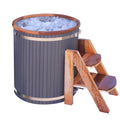
This is where a home setup changes the equation. The value is not just access. It is control. You can choose timing, temperature, and frequency based on your training block instead of forcing the modality into a commercial wellness schedule. That level of precision is what turns cold exposure from a trend into a deliberate practice.
Signs your approach is working
The right protocol should support your actual life, not just your feed. If your cold routine is helping, you will usually notice better subjective recovery, more willingness to train, improved composure after hard sessions, and less friction around consistency.
If it is not working, the signs are usually just as clear. You may feel drained after plunging, struggle to warm up, dread the routine, or notice that your strength progression and muscle gain are stalling while you keep chasing the recovery high.
A refined recovery routine should create clarity, not confusion. The body responds well to stress when the dose is measured.
Who should be more cautious
Cold exposure is not for everyone at every moment. If you have cardiovascular concerns, uncontrolled high blood pressure, circulation issues, or a history of adverse reactions to cold, you should get medical guidance before starting. The same applies if you are tempted to use extreme temperatures despite feeling lightheaded or panicked on entry.
There is also no prize for doing it on your hardest days if your body is already under-recovered. More stress is still stress, even when it comes in a premium format.
The practical standard
If you want the simplest answer, use this one. For hypertrophy, avoid an immediate cold plunge after lifting. For recovery-focused phases, sport performance, or demanding schedules, use it strategically. Keep the water cold but manageable, the session brief, and the goal specific.
That is the larger shift in modern recovery. The point is not to collect more modalities. It is to use each one with precision, in the right sequence, for the outcome you actually want. Done that way, cold can be a powerful part of a disciplined home ritual - calm, controlled, and fully aligned with how you train and how you want to live.