
How to Choose the Best Home Cold Plunge
A cold plunge that looks good in a product photo can become a daily frustration once it is in your garage, gym, or backyard. Noise matters. Water sanitation matters. The shape of the tub matters more than most people expect. If you are searching for the best home cold plunge, the real question is not which unit looks the most advanced. It is which one you will actually use, consistently, for years.
Cold exposure has moved well beyond athlete circles. It now sits inside a broader home recovery practice alongside sauna, red light, sleep optimization, and deliberate breathwork. That shift changes how you should shop. A home plunge is not a novelty purchase. It is infrastructure for a repeatable routine.
What actually makes the best home cold plunge
The best home cold plunge is not defined by the lowest temperature on a spec sheet. Most people do not need near-freezing water to get meaningful results. Consistent use at a controlled temperature is more valuable than chasing an extreme number once a week.
What matters is thermal stability, sanitation, comfort, and fit within your space. If the water drifts several degrees during a session, recovery becomes harder to control. If filtration is weak, maintenance turns into a chore. If getting in and out feels awkward, your morning practice starts with resistance instead of clarity.
Premium buyers should also care about service. A cold plunge includes plumbing, electrical requirements, delivery logistics, and long-term maintenance. When support is thin, even a visually impressive unit can feel like a complicated appliance rather than a recovery system.
The best home cold plunge depends on how you plan to use it
There is no single correct format for every household. A former collegiate athlete doing post-lift sessions six days a week needs something different than a busy executive using cold exposure for focus and stress regulation three mornings a week.
For performance recovery
If your main goal is reducing soreness and improving readiness between hard training sessions, cooling power and circulation matter most. You want quick pull-down, stable temperature, and enough interior space to sit comfortably without compressing your hips and shoulders.
For longevity and daily ritual
If you are using cold exposure as part of a broader health practice, the best home cold plunge may be the one with the lowest friction. Quiet operation, clean design, easy sanitation, and simple controls become more important than aggressive commercial-grade output.
For shared household use
If multiple people will use it, usability becomes central. Different body sizes, different temperature preferences, and different tolerance levels all point toward adjustable settings, dependable filtration, and a tub shape that feels accessible rather than intimidating.
Cooling system and water quality are where premium value shows up
This is the category where marketing language often clouds practical differences. Many buyers focus on shell design first and mechanical performance second. That is backwards.
A strong chiller keeps water at your target range without struggling in warmer environments. If the plunge will live outdoors in a hot climate, this matters even more. An underpowered system can still work, but it will work harder, recover slower, and often create more noise.
Filtration and sanitation deserve the same level of attention. Standing cold water without proper cleaning support becomes unappealing fast. Ozone, UV, reliable filtration, and straightforward maintenance procedures help protect water quality and reduce the burden of ownership. A premium plunge should support clean water with minimal interruption to your routine.
Insulation also plays a larger role than most people assume. Better insulation improves efficiency, supports thermal stability, and reduces strain on the system. That affects operating cost, but more importantly, it affects consistency. Consistency is the whole point.
Comfort is not a luxury detail
People often underestimate how different tubs feel once you are actually submerged at 45 to 50 degrees. A plunge that appears compact and elegant online may force an awkward knee position or leave your shoulders exposed. A unit with better ergonomics may support longer, calmer sessions because your body can settle instead of brace.
Look closely at depth, internal dimensions, seat angle, and entry height. If you are tall, broad-shouldered, or planning to submerge to shoulder level, small design differences become decisive. If older family members will use it, safe entry and exit should not be treated as secondary.
The best home cold plunge supports stillness. That may sound subjective, but it matters. A system that feels composed, balanced, and intentional invites regular use. One that feels cramped or unstable does not.
Indoor versus outdoor setup changes the buying decision
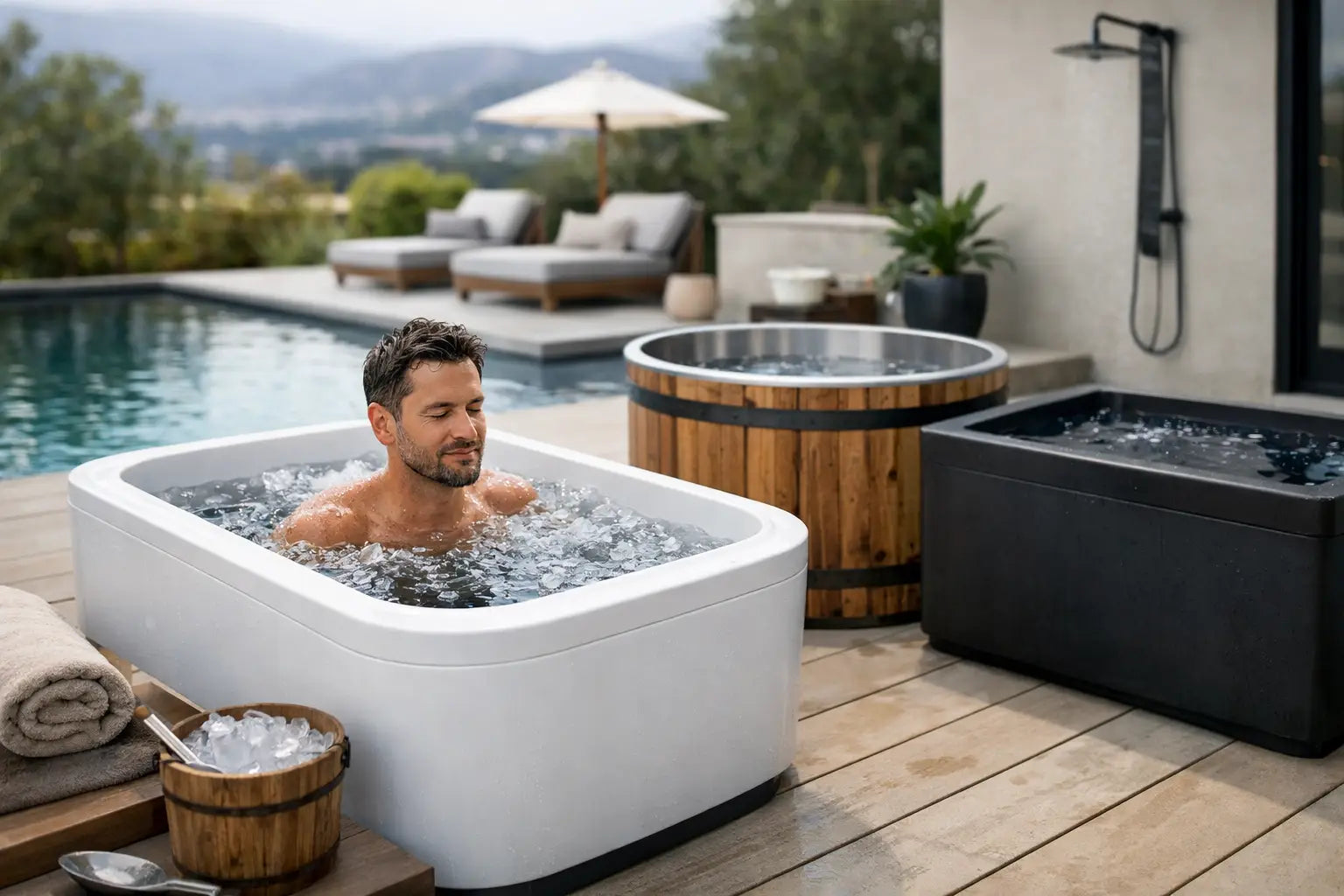
Placement shapes nearly every practical detail. An outdoor installation may give you more space and stronger ritual appeal, but it also introduces weather exposure, drainage considerations, and climate-related performance demands.
Indoor placement brings its own standards. You need to think about flooring, splash management, ventilation, and access during delivery. A basement gym can be an excellent setting, but only if the path to install is realistic and the room can support the unit over time.
This is where white-glove delivery and installation support matter. Premium equipment should arrive with a clear plan, not a stack of problems for the homeowner to solve. For buyers investing in a higher-end wellness environment, service is part of the product.
The cheapest option is rarely the best home cold plunge
There is a place for entry-level tubs and inflatable designs. They can be useful for testing the habit or keeping costs low. But they usually involve trade-offs in temperature control, insulation, durability, sanitation, and aesthetics.
If you already know cold exposure is part of your life, it makes sense to buy for the second year of ownership, not the first month. A bargain unit can become expensive in time, frustration, and replacement cost. A better-built plunge tends to deliver something more valuable than features alone: trust. You know it will be ready when you are.
That said, more expensive is not automatically better. Some luxury-marketed systems overinvest in appearance while underdelivering on the mechanics. Others push commercial specifications that exceed what a home user actually needs. The right choice sits at the intersection of performance, reliability, and everyday livability.
Features worth paying for and features you can question
A few upgrades usually justify their price. Strong filtration, dependable sanitation, quality insulation, durable materials, and intuitive controls all improve real ownership. A good cover matters too. It protects water quality, supports temperature retention, and makes the system easier to manage.
Some features are more conditional. App controls can be useful, but they are not essential if the onboard interface is simple. Lighting can improve atmosphere, though it should not distract from the fundamentals. Extra accessories may sound premium but add little if they do not improve comfort, safety, or maintenance.
When comparing models, ask a simple question: does this feature increase consistency, comfort, or confidence? If not, it may be decorative rather than meaningful.
How to evaluate the best home cold plunge for your routine
Start with your intended frequency. If you plan to plunge most days, choose a system designed for easy ownership, not occasional use. Then assess your environment. Climate, available space, electrical setup, and drainage all shape which units make sense.
Next, consider your body size and preferred immersion depth. This is one of the easiest ways to rule out a model quickly. After that, evaluate maintenance honestly. If the cleaning process feels annoying on paper, it will feel worse in real life.
Finally, evaluate support. Warranty terms, trial periods, financing, and installation options are not soft benefits. They reduce purchasing risk on a high-ticket product. For many buyers, especially those building a more complete home recovery space, that reassurance is part of what distinguishes a premium brand like HALOR from a commodity seller.
A cold plunge should fit your life, not interrupt it
The strongest setups do not rely on motivation. They reduce friction. The tub is in the right place. The water is ready. The controls are simple. The design belongs in the home instead of feeling like a compromise.
That is why the best home cold plunge is rarely the one with the most aggressive marketing or the most extreme temperature claim. It is the one that turns cold exposure into a disciplined practice you can repeat with calm, clarity, and minimal effort.
Choose the system that respects your space, your standards, and your routine. When recovery is easy to return to, it stops being aspirational and starts becoming part of who you are.