
Red Light Wavelength Guide for Better Results
A red light panel can look simple: a field of LEDs, a power switch, a few minutes of stillness. But the result is shaped by a more technical decision happening beneath the surface: wavelength. This red light wavelength guide clarifies what the numbers mean, why premium panels commonly combine them, and how to choose a setup that supports the way you train, recover, and live.
Wavelength is measured in nanometers, or nm. It determines the color of visible light and, more importantly, how light interacts with tissue. Red light generally falls in the visible range around 600-700nm. Near-infrared light, usually 700-1,100nm, is invisible to the eye. Both are used in photobiomodulation, the research term for light-based cellular signaling.
The practical distinction is not that one wavelength is universally better. It is that each has a different relationship with tissue depth, treatment area, and intended use.
Red Light Wavelength Guide: The Core Ranges
Most home red light therapy panels center on a small group of well-studied wavelengths: 630nm, 660nm, 810nm, and 850nm. You may also see 830nm, 940nm, or 1,060nm in more specialized devices. The first four are a strong foundation because they cover visible red light and near-infrared light in a format suited to consistent home use.
630nm: Visible red light for surface-focused care
At 630nm, red light is visibly warm and bright. This range is often selected for skin-focused routines because it is absorbed more readily in superficial tissue. It is commonly discussed in relation to skin appearance, tone, and the processes involved in collagen support.
For someone building an evening ritual around facial skin quality, 630nm has a clear role. It can be especially relevant when the goal is a calmer, more deliberate alternative to complicated topical routines. Expectations should remain measured, though. Light therapy is not a substitute for sun protection, sleep, nutrition, or clinically indicated dermatologic care.
660nm: The versatile visible-red workhorse
660nm is one of the most common wavelengths in red light therapy. It remains visible, but it is often chosen for somewhat broader tissue interaction than 630nm. Research and device design frequently position 660nm as a versatile wavelength for skin, circulation-related signaling, and general wellness protocols.
If you only recognize one number while comparing panels, it will likely be 660nm. That familiarity is useful, but it should not be the sole buying criterion. A 660nm LED has value only within a complete system that also delivers appropriate irradiance, coverage, heat management, and usability.
810nm and 850nm: Near-infrared for deeper recovery routines
Near-infrared wavelengths are invisible. A panel using 810nm or 850nm may still appear to glow because it also includes visible red LEDs, but near-infrared itself cannot be seen. These wavelengths are generally associated with deeper penetration than visible red light, making them a common choice for muscle recovery, joint-focused protocols, and post-training routines.
The difference between 810nm and 850nm is not a simple contest. Both are established ranges in photobiomodulation research, and both are frequently included in full-body panels. Some research suggests 810nm may have particular relevance to neurological applications, while 850nm is widely used in performance and recovery-oriented equipment. For at-home use, a panel that thoughtfully combines the two often makes more sense than trying to select a single winner.
Why Multi-Wavelength Panels Are Usually the Better Choice
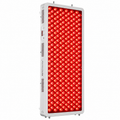
Your body does not have one uniform goal. Facial skin sits close to the surface. Quads after a hard training block, a stiff lower back after travel, and a shoulder that needs attention are different use cases. A multi-wavelength panel lets one modality serve several parts of a disciplined wellness practice.
This is why high-quality panels typically blend visible red and near-infrared LEDs rather than forcing an either-or decision. The visible wavelengths support surface-oriented sessions. Near-infrared wavelengths extend the panel's utility toward deeper recovery work. Used together, they make the device more adaptable without requiring a separate tool for every objective.
There is also a practical advantage: adherence. The best protocol is not the most complicated one. It is the one you can repeat. A full-spectrum panel placed where you stretch, train, or begin your morning creates fewer decisions and more consistent use.
Wavelength Is Only One Part of Dose
Wavelength gets attention because it is easy to print on a product page. Dose is where the real judgment begins. Two panels with the same 660nm and 850nm LEDs can perform very differently depending on irradiance, distance, session duration, beam angle, and treatment area.
Irradiance is the amount of optical power reaching a surface, typically expressed in milliwatts per square centimeter, or mW/cm². Higher irradiance can shorten treatment time, but more is not automatically better. Photobiomodulation is often described as having a biphasic dose response: too little light may produce little effect, while excessive exposure may be less productive than a measured dose.
That is why manufacturer guidance matters. It should specify treatment distance, timing, and whether the quoted irradiance was measured at the surface of the panel or at a practical use distance. A number without context is not useful. For a full-body routine, coverage and comfort may matter more than chasing the highest possible output.
Heat is another trade-off. Red light therapy panels can feel warm, particularly at close range. That warmth may be pleasant in a recovery setting, but it is different from the intentional thermal load of an infrared sauna. If your goal is light exposure rather than heat, choose a distance and session length that feels sustainable.
Choosing Wavelengths for Your Primary Goal
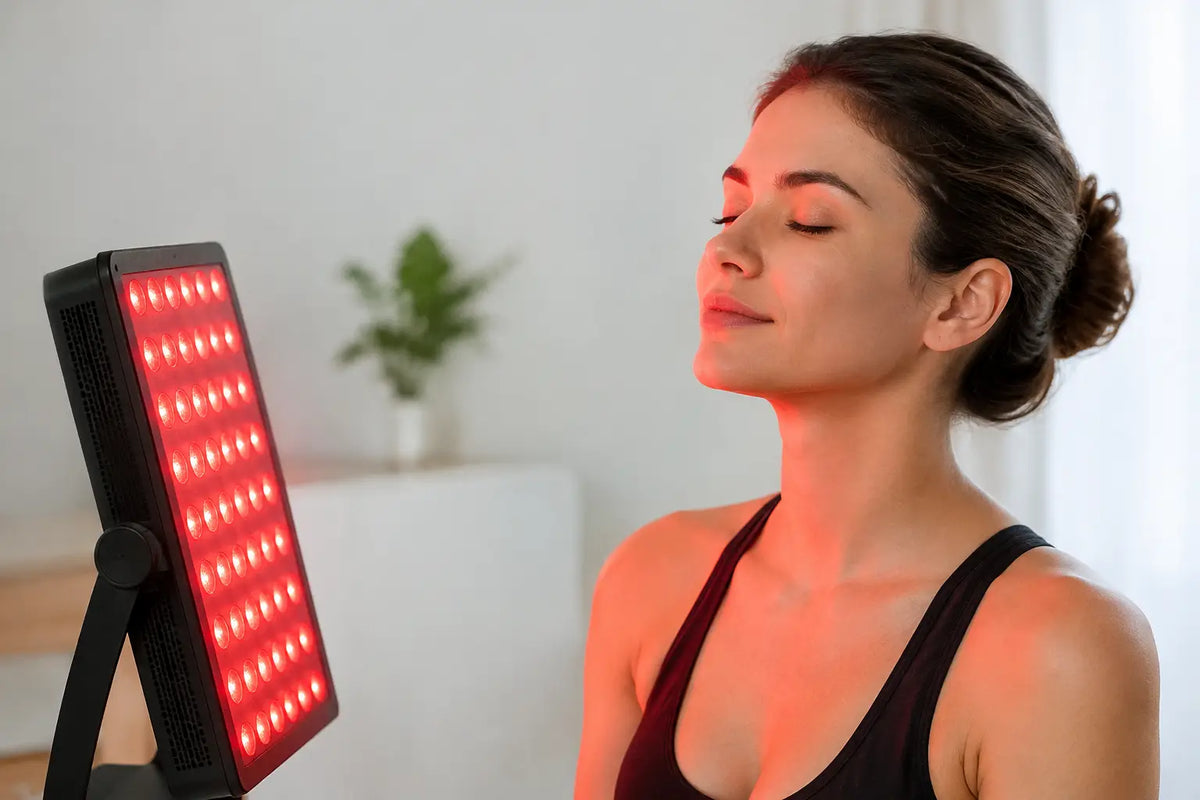
For skin-focused use, prioritize a panel with meaningful visible red output, especially around 630nm and 660nm. A smaller device can be appropriate when treatment is limited to the face, neck, or a targeted area. Eye protection and device-specific instructions should be part of the routine, particularly when the panel is used close to the face.
For muscle recovery and training support, a blend of 660nm with near-infrared wavelengths such as 810nm and 850nm is generally the more flexible choice. Larger panels offer a more efficient experience for legs, back, and full-body sessions. This matters when recovery must fit between work, training, and family commitments.
For a longevity-oriented home setup, avoid treating red light as an isolated intervention. It works best as part of a broader rhythm: training that challenges you, sleep that restores you, protein and hydration that support adaptation, and recovery practices you can maintain. A panel should reduce friction, not add another demanding task to the calendar.
How to Use a Red Light Panel With More Intention
Start with the instructions for your specific device. A common at-home approach is to stand roughly 6-18 inches from the panel for a short session, several times per week. The correct distance and duration depend on output and treatment goal, so a generic protocol should never override the panel's specifications.
For full-body recovery, expose one side of the body, then turn around if the panel and session structure call for it. For targeted areas, position the body so the treatment zone faces the LEDs directly. Clothing blocks light, so bare skin is generally preferred when practical and appropriate.
Consistency carries more weight than marathon sessions. Ten measured minutes after strength training, or a quiet morning session before the day accelerates, is often more valuable than occasional overuse. Track the outcomes that matter to you: perceived soreness, training readiness, skin quality, sleep routine consistency, or simply whether the practice gives you a reliable moment of stillness.
Safety and Quality Questions Worth Asking
A premium panel should offer more than an appealing wavelength list. Look for transparent output specifications at stated distances, credible electrical safety testing, thoughtful cooling, a durable housing, and a warranty that reflects long-term ownership. For a large home wellness purchase, delivery support and setup guidance also matter. The experience should feel considered from placement to daily use.
Photosensitivity is a meaningful consideration. Speak with a qualified clinician before using red or near-infrared light therapy if you take photosensitizing medications, have a light-sensitive condition, are managing an active medical issue, or are uncertain about use around a specific area. Red light therapy is a wellness modality, not a diagnosis or treatment plan.
The right wavelength strategy is rarely about finding one magic number. It is about choosing a well-built combination, using it at an appropriate dose, and giving it a consistent place in your environment. When the panel is easy to use and designed for the life you actually lead, recovery becomes less of an event and more of a deliberate daily standard.