
Red Light Therapy at Home for Better Recovery
The value of red light therapy at home is not that it turns a spare room into a clinic. It is that it gives recovery a permanent place in your schedule. Ten deliberate minutes before training, after a shower, or at the end of a demanding workday can be easier to repeat than an appointment across town.
Photobiomodulation, the scientific term often used for red and near-infrared light treatment, has become a fixture in performance facilities and wellness practices for good reason. The right device and protocol can support a considered routine for muscle recovery, skin quality, circulation, and general well-being. Results, however, are shaped by more than the color of the light. Device quality, dose, consistency, and realistic expectations all matter.
What Red and Near-Infrared Light Are Designed to Do
Red light typically operates in the visible spectrum, often around 630 to 660 nanometers. It is commonly selected for surface-level applications, including skin-focused routines. Near-infrared light, frequently in the 810 to 850 nanometer range, is invisible to the eye and is generally used where deeper tissue penetration is the goal.
Both are intended to deliver light energy to cells, where it may influence cellular signaling and mitochondrial activity. Mitochondria help produce adenosine triphosphate, or ATP, the energy currency used by cells. This is the basis for interest in photobiomodulation across recovery, exercise performance, and skin health.
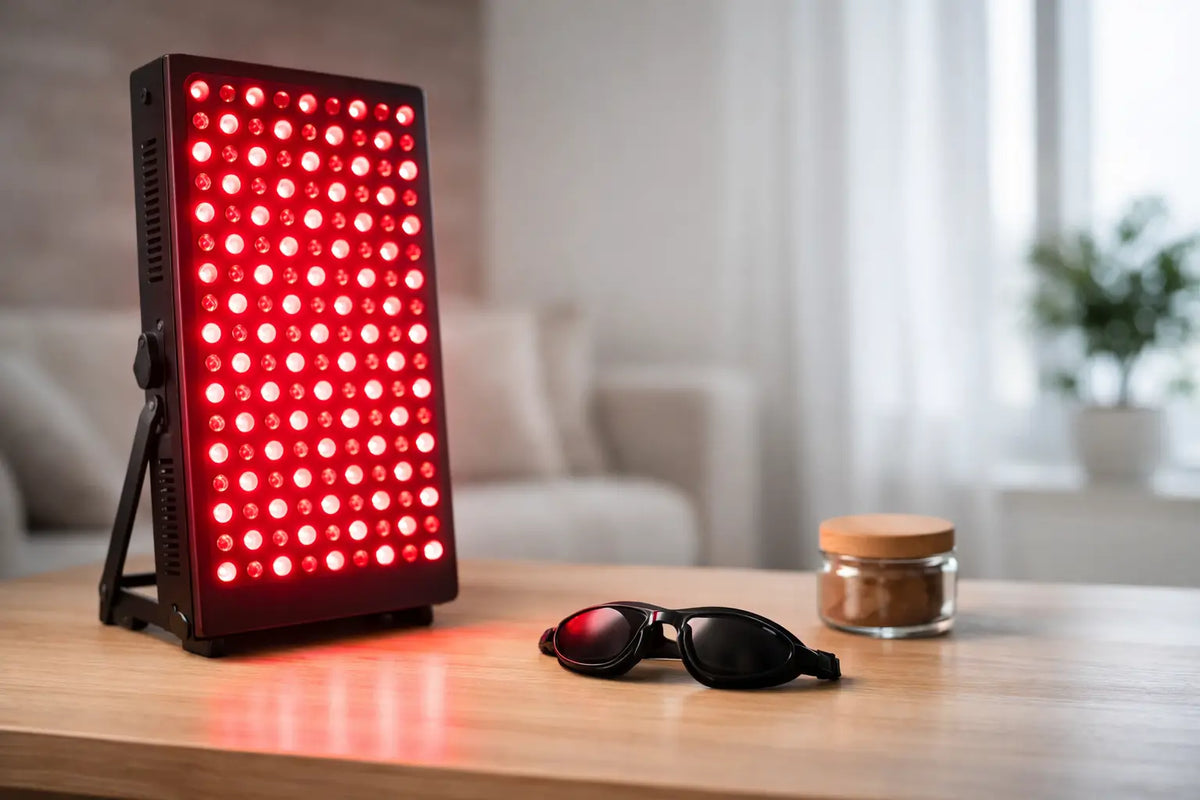
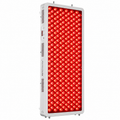
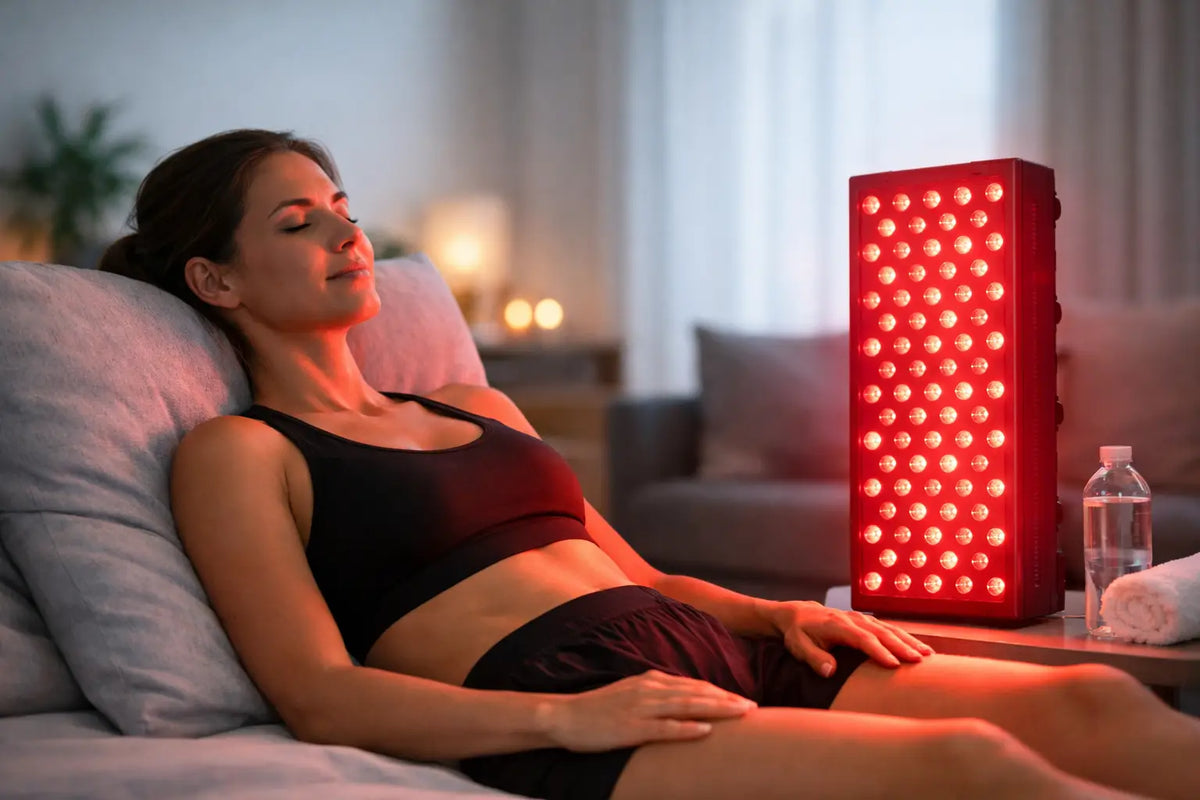
The distinction matters because a well-designed panel often combines red and near-infrared wavelengths rather than asking one wavelength to do every job. A face mask may make sense for a targeted skincare ritual. A full-body panel is better suited to someone who wants to address large muscle groups after lifting, running, cycling, or a long day seated at a desk.
Research in this area is promising, but it is not a license for broad medical claims. Red light therapy is not a substitute for clinical care, rehabilitation, sleep, sound nutrition, or training discipline. Think of it as a supportive modality: a practical input that earns its place when it helps you maintain the larger system.
Choosing Red Light Therapy at Home
Premium equipment should make a daily practice more precise, not more complicated. Before comparing finishes or mounting options, look at the specifications that determine whether a device can fit your goals.
Wavelengths and coverage
For broad home use, a panel with both red and near-infrared wavelengths offers flexibility across skin and recovery applications. Coverage is equally important. A compact panel can be a focused tool for the face, neck, joints, or a specific muscle group. Larger panels reduce the time required to treat the back, legs, and torso.
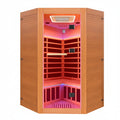
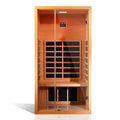
The right size depends on how you plan to use it. If your objective is a brief skincare session, a small device may be entirely appropriate. If you are building a recovery station beside a cold plunge or infrared sauna, broader coverage usually creates a more efficient ritual.
Irradiance and dose
Irradiance describes the light power delivered across an area, usually expressed as milliwatts per square centimeter. Higher is not automatically better. What matters is whether the panel provides a credible, clearly stated output at the recommended treatment distance, allowing you to reach a useful dose without standing in front of it for an impractical length of time.
Dose is often discussed in joules per square centimeter. It is influenced by irradiance and session duration. There is also a meaningful trade-off: too little exposure may be ineffective, while more time is not necessarily more beneficial. Photobiomodulation is often described as having a biphasic response, meaning the appropriate dose range matters.
This is why transparent instructions are part of product quality. A serious manufacturer should give you recommended distances, session lengths, and guidance for specific use cases instead of relying on vague promises.
Build quality, controls, and home integration
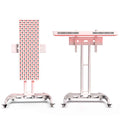
A red light panel becomes useful when it is easy to use consistently. Consider whether it can be wall-mounted, placed on a stand, or positioned beside the routines you already keep. Adjustable intensity, separate red and near-infrared controls, timers, cooling, and low-flicker operation can make the experience more comfortable and controllable.
For a substantial home wellness purchase, service matters as much as specifications. Delivery, installation support, warranty coverage, a meaningful home trial, and responsive guidance remove friction from adoption. HALOR approaches recovery hardware as a long-term part of the home, not a novelty that arrives in a box and disappears into storage.
A Protocol That Fits Real Life
The best protocol is one you can repeat without negotiating with yourself. Most people begin with short sessions several times per week, following the device manufacturer’s guidance on distance and duration. A common starting point is roughly 10 to 15 minutes per area, then adjusting based on the panel’s output, the treatment goal, and personal response.
For skin-focused use, begin with clean, dry skin and keep the session simple. Heavy products can create a barrier or make the routine unnecessarily messy. For post-training recovery, position the light in front of the muscle groups you want to address, such as quads, hamstrings, calves, shoulders, or back. You do not need to turn every session into a production.
Timing is flexible. Some people prefer morning exposure as part of an energizing start to the day. Others use a session after training or in the evening as a transition into stillness. Near-infrared light does not contain the ultraviolet wavelengths associated with tanning or sunburn, but individual response varies. If evening sessions feel stimulating for you, move them earlier.
Consistency is more valuable than marathon sessions. Aim for a defined trial period, such as six to eight weeks, and track a few relevant signals: training soreness, range of motion, skin texture, or how reliably you complete your routine. Subjective changes can be meaningful, but tracking prevents wishful thinking from becoming your only measure.
Where It Fits in a Recovery System
A red light panel is strongest when it complements the fundamentals rather than competing with them. Sleep remains the primary recovery tool. Protein intake, progressive training, hydration, mobility work, and stress management remain non-negotiable. Light therapy can support a disciplined approach, but it cannot compensate for a system with no recovery margin.
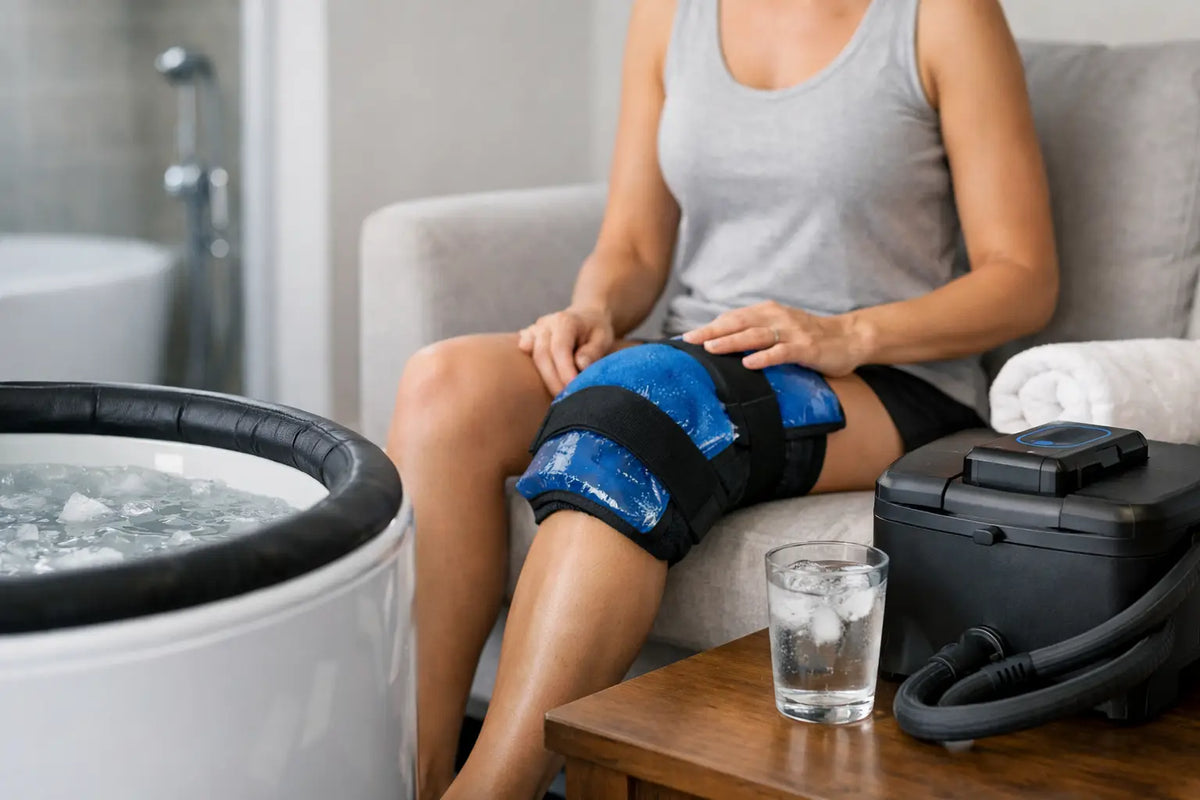
There is also no single correct sequence for a home longevity stack. If you pair red light with an infrared sauna, some people prefer light before heat to keep the session focused and comfortable, while others separate them for simplicity. If you use cold exposure, consider your immediate goal. Cold may be useful for alertness or perceived soreness, but frequent intense cold directly after strength training may not align with every muscle-building objective. Your protocol should reflect the outcome you are pursuing, not a checklist of trends.
A practical arrangement might be a red light session after morning mobility, a sauna session later in the day, and cold exposure on selected days when it serves your training and mental state. The point is not to do more modalities. It is to make each one deliberate.
Safety and Sensible Expectations
Quality red light devices are designed for home use, but responsible use still matters. Follow the manufacturer’s distance, duration, and eye-protection guidance. Do not stare directly into bright LEDs. Some devices recommend protective eyewear, particularly when treating the face or when near-infrared light is active.
Speak with a qualified clinician before starting if you take photosensitizing medications, have a light-sensitive condition, are managing active cancer, are pregnant, or have a medical concern that could affect treatment. Redness, warmth, or temporary discomfort can occur, and a lower dose or greater distance may be appropriate if the experience feels excessive.
Be equally cautious about promises. A panel that claims to solve every skin concern, injury, mood issue, and chronic condition is not offering precision. The more credible position is also the more useful one: red light therapy may support specific goals when used consistently, with a capable device and a sound foundation of health habits.
Make the Practice Easy to Keep
The most refined home wellness spaces do not feel crowded with equipment. They feel calm because every tool has a purpose. Place your panel where it naturally belongs: near a training area, beside a bathroom routine, or in a quiet recovery corner where you can stand still for a few minutes.
Start with a modest protocol, learn how your body responds, and give the practice enough time to become familiar. When recovery is built into the architecture of your day, it stops feeling like another task and starts becoming part of how you protect your capacity.