
Cold Plunge Water Filtration That Works
A cold plunge should feel like a deliberate reset, not a maintenance problem waiting to happen. Effective cold plunge water filtration keeps the water clear, supports hygiene between sessions, and protects the calm, focused ritual that makes cold exposure easier to sustain at home.
The key is understanding that filtration is only one part of water care. A filter removes physical debris. A sanitation method manages microorganisms. Circulation distributes treated water throughout the vessel. When these systems work together, you spend less time draining and scrubbing your plunge and more time using it with consistency.
Why Cold Plunge Water Filtration Matters
Cold water can look clean long after it has stopped being fresh. Skin cells, body oils, sweat, hair, skincare residue, and airborne dust enter the water with every session. A covered plunge slows that process, but it does not eliminate it. If multiple people use the tub, the water load increases quickly.
Temperature changes the equation. Cold water may slow some microbial activity compared with warm water, but it does not sterilize the water. It also does not prevent buildup along the waterline, inside plumbing, or within a filter housing. Treating cold temperatures as a substitute for sanitation is a common and costly mistake.
For a high-use home recovery setup, water quality affects more than appearance. Clear, well-maintained water makes the routine more inviting. It helps preserve the internal components of a premium plunge and reduces the likelihood of odors, residue, or an unexpected maintenance session interrupting your week.
Filtration, Circulation, and Sanitation Are Different Jobs
A well-designed cold plunge water-care system typically combines three functions. Each one addresses a distinct part of the problem.
Mechanical filtration captures particles
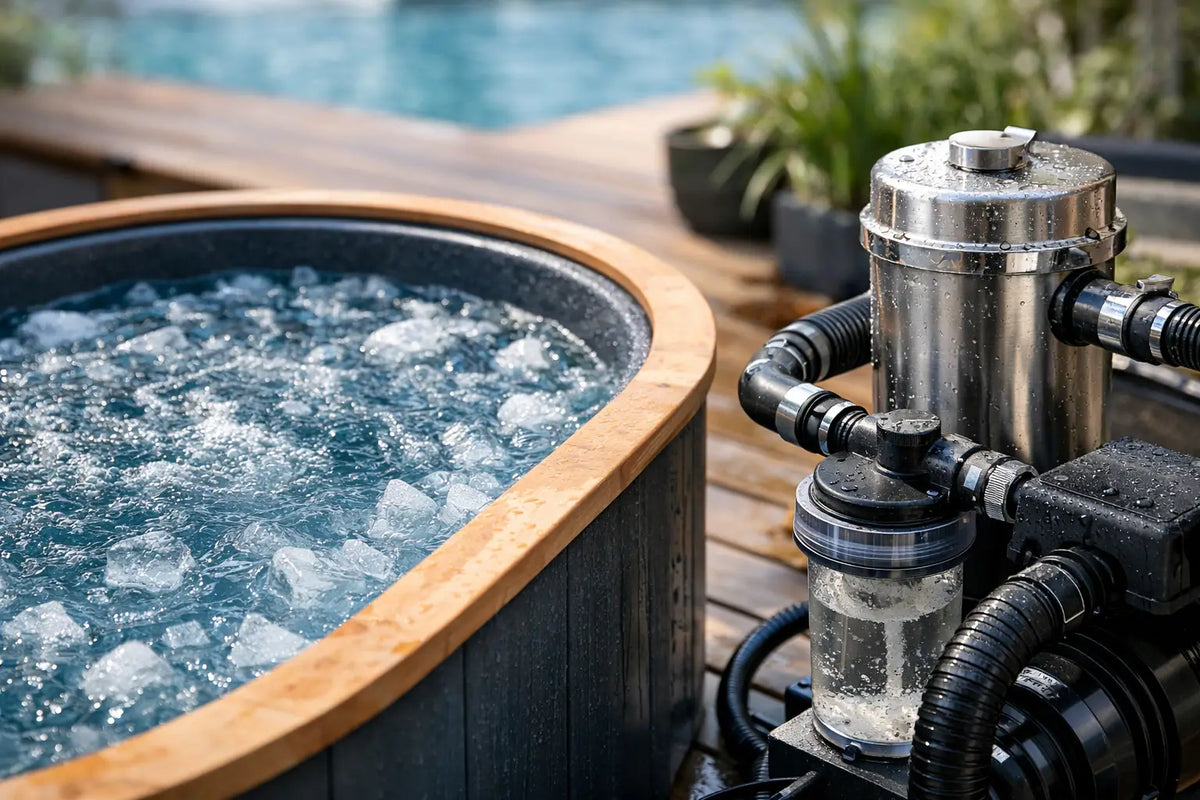
Mechanical filtration moves water through a physical medium, often a replaceable cartridge or fine mesh filter. It captures visible and microscopic particles such as hair, lint, sediment, and skin debris. The finer the filtration rating, the smaller the particles it can remove.
Fine filtration can produce exceptionally clear water, but it brings a trade-off: smaller pores clog faster. A high-performance filter needs regular inspection and cleaning to maintain proper flow. If circulation slows, the system cannot effectively move debris or distribute sanitizer through the water.
For most residential cold plunges, the goal is not simply the finest possible filter. It is reliable filtration matched to the pump, plumbing, tub volume, and expected frequency of use.
Circulation keeps water from becoming stagnant
A pump circulates water through the filtration and treatment system. Without consistent movement, debris settles, water treatment becomes uneven, and parts of the vessel receive less effective cleaning.
Continuous circulation is useful for frequent users, especially in a shared household. Timed circulation can be a practical, energy-conscious option for a plunge used once or twice a week. The right approach depends on the equipment design, room temperature, bather load, and whether the unit is indoors or exposed to outdoor debris.
Pump performance matters as much as the filter itself. A system with excellent filtration media but weak or inconsistent flow will not deliver the water quality its specifications suggest.
Sanitation manages what a filter cannot remove
A filter cannot neutralize microorganisms on its own. This is where sanitation enters the system. Depending on the plunge, this may involve ozone, ultraviolet light, an approved chemical sanitizer, or a combination of methods.
Ozone can help reduce organic contaminants as water passes through a treatment chamber. UV systems expose circulating water to ultraviolet light, which can reduce microbial activity in the water moving through the unit. Both can be valuable components of a water-care strategy, but neither removes particulate debris. Neither should be treated as a reason to ignore filter maintenance or water testing.
Chemical sanitation may still be required, particularly for frequent use or multiple bathers. Follow the equipment manufacturer’s guidance on approved products, concentration ranges, and testing. More sanitizer is not better. Excessive levels can be unpleasant on the skin, hard on components, and counterproductive to the clean experience you are trying to create.
Choosing a Cold Plunge Water Filtration System
Start with your actual routine rather than the most impressive specification on a product page. A solo user who showers before each plunge and uses the unit three times a week has very different water-care needs than a household where two athletes plunge daily.
Consider water volume first. Smaller vessels are easier and less expensive to drain, but their water quality can change more quickly because each session represents a larger percentage of the total volume. Larger plunges dilute bather load more effectively, yet they require a capable circulation system and take more time to refresh completely.
Next, consider location. An indoor plunge in a clean, climate-controlled recovery room faces fewer environmental contaminants than an outdoor unit near landscaping, wind, pollen, and rain. An outdoor setup benefits from a fitted cover and more frequent filter checks, even when the water still appears clear.
Finally, look at access. The best system is one you can maintain without friction. Can you reach the cartridge easily? Does the system make it straightforward to inspect flow, rinse a filter, drain the tub, and clean the waterline? Premium recovery equipment should support a disciplined practice, not create another technical chore to postpone.
A Practical Maintenance Rhythm
Water care is most effective when it becomes routine. A few minutes of attention at the right intervals can prevent a full reset later.
Before entering, rinse off when possible. This single habit reduces the introduction of sweat, lotions, deodorant, hair products, and outdoor debris. Use a dedicated swimsuit if you wear one, and avoid entering immediately after applying body oil or heavy skincare products.
After use, replace the cover securely. Check the waterline regularly and wipe away any developing residue before it becomes a stubborn film. Inspect the filter according to the manufacturer’s schedule, then clean or replace it when flow declines or visible buildup is present. A cartridge that looks only mildly discolored may already be restricting circulation.
Test water chemistry when your system uses a chemical sanitizer, and record what you add. Precision is better than guesswork. Water that develops cloudiness, foam, an unusual odor, or slippery surfaces needs attention immediately. Do not attempt to mask these warning signs with fragrance or extra sanitizer. Determine whether the issue is filtration, circulation, chemical balance, organic load, or a need for a full drain and clean.
Even advanced filtration does not make water permanent. Every plunge has a recommended drain-and-refill interval based on its volume, treatment method, and usage. Follow that interval conservatively, especially during periods of heavier use.
Common Filtration Mistakes to Avoid
The most common mistake is waiting for visibly dirty water before taking action. By that point, the filter may be loaded, circulation may be compromised, and residue may already be forming in places you cannot see.
Another is relying on a single technology. A filter without sanitation handles particles but not the full hygiene picture. Sanitization without filtration leaves debris circulating or settling in the vessel. A premium home setup needs both functions, supported by appropriate water movement.
It is also easy to overlook the cover. An uncovered plunge collects far more than most owners expect, particularly outdoors. A well-fitted cover protects water quality, reduces evaporation, limits light exposure, and helps your system work as designed.
Build Water Care Into the Ritual
Cold exposure asks for presence. The breath slows, the body adapts, and the mind learns to stay steady under controlled stress. The condition of the water should reinforce that experience.
Choose cold plunge water filtration that fits your usage, maintain it with the same discipline you bring to training, and respect the difference between clear water and properly cared-for water. When the system is designed for consistency, the plunge remains what it should be: a quiet, reliable space for recovery and deliberate practice.