

A Smarter Running Recovery Routine
The run ends, but the training stimulus does not. What you do in the next 30 minutes, the next 8 hours, and the next day often determines whether that session builds capacity or just adds fatigue. A strong running recovery routine is less about pampering and more about preserving output - steady legs, lower soreness, better sleep, and the ability to train again with intent.
For serious runners and performance-minded adults, recovery works best when it is structured. Not complicated. Not performative. Just repeatable. The goal is to reduce unnecessary stress, support tissue repair, and return the nervous system to a calmer baseline without dulling useful adaptation.
What a running recovery routine should actually do
A good routine helps the body shift out of a high-output state. Running creates mechanical load through the calves, quads, hamstrings, hips, and feet, while also challenging the cardiovascular system and central nervous system. Recovery is the process of absorbing that load.
That means your routine should support hydration, circulation, mobility, downregulation, and sleep. For harder sessions, it may also help manage inflammation and soreness. The exact mix depends on the run. A short zone 2 effort does not require the same response as a long run, hill session, or race.
This is where many runners get it wrong. They treat every session as if it demands a full intervention, or they ignore recovery entirely until pain forces the issue. The better approach is calibrated consistency. Match the recovery dose to the training dose.
The first hour matters most
The most effective part of a running recovery routine usually happens immediately after the session. This is your reset window.
Start by bringing the system down gradually. If the run was hard, walk for a few minutes instead of stopping cold. That simple transition supports circulation and gives your breathing and heart rate time to settle. From there, fluids matter. Rehydration should reflect sweat loss, climate, and duration, not just habit. If the run was hot, long, or especially taxing, electrolytes may matter as much as water.
Nutrition is equally practical. You do not need a perfect formula after every run, but you do need enough protein and carbohydrate to begin repair and replenish glycogen when the workout justifies it. Skipping this step is often manageable once. Repeating it across weeks tends to show up as flat legs, slower recovery, and reduced training quality.
Then there is mobility. This is not the moment for an aggressive flexibility project. Keep it simple: calves, hip flexors, glutes, hamstrings, and feet. Think gentle range of motion and tissue decompression, not intensity. If you finish a hard workout and immediately attack your body with long static stretches, you may leave the session feeling more irritated than restored.
Recovery after easy runs vs hard runs
Not every run deserves the same protocol, and that distinction keeps recovery efficient.
After easy runs, the routine can stay minimal. A short walk, hydration, a normal meal, and some light mobility are usually enough. If you slept well and feel fresh, that may be the entire answer. Overengineering easy-day recovery can turn maintenance into friction.
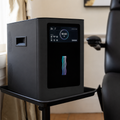
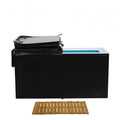
After hard runs, the routine should become more deliberate. Tempo sessions, intervals, long runs, and races create more tissue stress and deeper nervous system fatigue. That is when modality-based recovery can earn its place. Cold exposure may help reduce soreness and perceived fatigue. Infrared heat may support circulation, relaxation, and recovery on later phases of the day. Red light therapy may fit well around soft tissue support and routine consistency. The key is sequencing and intent.
Cold exposure immediately after every quality session is not always the right move if your goal is maximizing certain adaptations from strength work done nearby. But for runners managing heavy mileage, joint stress, or race-density blocks, it can be a valuable tool. Infrared sauna may be a better choice later in the day when the priority is downshifting, warmth, and sleep readiness. It depends on the session, the season, and how your body responds.
Building a running recovery routine at home
The real advantage of a home-based system is not novelty. It is compliance. When recovery is built into your environment, it becomes easier to repeat without wasting time, adding travel, or relying on motivation.
A practical home routine often begins with the basics you can execute daily: hydration, post-run fueling, showering, mobility, and a consistent sleep schedule. Those are your foundation. Advanced tools should sit on top of that, not replace it.
If you use cold therapy, think in terms of dosage. Short, controlled exposure can help lower post-run soreness and create a strong reset signal, especially after long or high-impact work. But more is not automatically better. You want enough exposure to feel the effect without creating another major stressor.
Infrared sauna works differently. Many runners prefer it later in the day or on non-running days when stiffness lingers. The experience is quieter, more restorative, and often easier to sustain as a habit. It also aligns well with the broader goals many high-performers care about - calm, circulation, skin health, and sleep support.
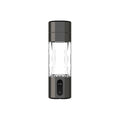
Red light therapy is one of the easier modalities to integrate because it asks little of your schedule. It can become part of a morning or evening ritual, especially for athletes who value consistency over intensity. Hydrogen water, similarly, tends to fit best as a low-friction habit rather than a dramatic intervention. For disciplined consumers, that matters. The best recovery tools are often the ones you will actually use four to six times a week.
The role of sleep in any running recovery routine
If your sleep is compromised, every other recovery practice becomes less effective. Deep sleep is where much of the repair work happens, from muscular restoration to hormonal regulation to cognitive reset. Runners who train hard but sleep poorly often mistake accumulating fatigue for a fitness plateau.
That is why the evening side of recovery deserves more attention. A calmer nervous system, lower body tension, and a stable pre-bed routine can improve sleep quality more than another round of stretching. Dimmer light, less screen exposure, a cooler room, and heat or light-based wellness practices used with intention can all help create a more repeatable transition into rest.
This is also where premium home recovery equipment starts to make sense for a certain kind of consumer. Not because it feels luxurious, though good design does matter in a home setting. It makes sense because convenience removes excuses. When recovery is available in your own space, the routine becomes part of the architecture of your day.
Signs your routine is working
A better running recovery routine does not always produce dramatic sensations. Often, the proof is subtle.
You notice less lingering soreness after quality sessions. Your stride feels more stable on the second or third run of the week. Sleep improves. Resting mood becomes more even. You stop dragging into workouts that should feel manageable. For more data-driven runners, this might also show up in steadier heart rate patterns, better pace control, or fewer missed sessions due to fatigue.
If none of that is happening, the issue may not be a missing recovery product. It may be under-fueling, poor sleep, excess intensity, or simple inconsistency. Recovery is a system, not a single modality.
The common mistakes that slow recovery
The first mistake is doing nothing until soreness spikes. Recovery works better as a steady practice than as damage control. The second is treating every ache as a signal to stack more interventions. Sometimes the body needs support. Sometimes it needs less training load.
The third mistake is confusing discomfort with effectiveness. Longer cold exposure, hotter sauna sessions, and more intense tissue work are not automatically smarter. Precision matters more than punishment.
For most runners, the best routine is not the most elaborate one. It is the one that fits their actual week, adjusts to training stress, and keeps showing up. That is what creates resilience.
A disciplined running life is built between sessions. Protect that space, and the miles begin to compound in a different way - with more clarity, more consistency, and far less friction.